When your Japanese vehicle’s air conditioning stops blowing cold, or the airflow feels weak, a Japanese vehicles car air con service is usually the first step toward getting comfort back. Air conditioning systems in Toyota, Honda, Nissan, Mazda, and Subaru models work similarly to other vehicles, but Japanese manufacturers often design their AC components with tighter tolerances and specific refrigerant requirements. In Mitchell, where summer temperatures push into the mid-30s, a functioning air con system isn’t just about comfort—it’s about safe, clear driving when you need it most. This guide walks through what that service involves, what signs show your system needs attention, and why proper maintenance matters for Japanese vehicle ownership.
Signs Your Japanese Vehicle’s Air Conditioning Needs Service
Air con problems rarely announce themselves all at once. Most start small and worsen over weeks or months, giving you clear warning signs if you know what to listen and feel for.
- Weak or slow airflow from vents, even with the fan on maximum
- Air blowing from vents but not cold, or only cold when the vehicle is moving
- Unusual smells—musty, sickly sweet, or chemical odours coming through the dash
- Visible moisture or pooling liquid under the vehicle near the front
- A grinding or squealing noise when you switch the AC on
- The AC compressor clutch not engaging (you’ll hear a click but no cooling effect)
Japanese vehicles often develop refrigerant leaks at connection points and around the compressor seal. Because these systems use precise refrigerant volumes—typically R134a in models up to around 2016, and increasingly R1234yf in newer Toyotas and Hondas—even small leaks compound over time. A slow loss of refrigerant can take weeks to become noticeable, so waiting until the system is completely empty means you’re running the compressor dry, which damages it further.
What a Japanese Vehicle AC Service Involves
A proper air con service for your Japanese vehicle starts with diagnosis. We connect a manifold gauge set to read the system’s high and low pressures, which tells us immediately whether refrigerant is present and how the compressor is functioning. On Japanese models, we also inspect the compressor clutch engagement and listen for bearing noise or grinding—common failure points on Toyota and Honda compressors.
Next comes a leak check using electronic leak detection equipment. Refrigerant leaks are almost invisible to the naked eye; electronic detection pinpoints them quickly. If a leak is found, we identify whether it’s at the compressor seal, a connection fitting, a hose, the condenser, or the evaporator. The location of the leak determines repair complexity and cost.
The actual service typically includes flushing the system to remove moisture and debris, replacing the receiver dryer (a filter that absorbs water inside the AC circuit), and recharging with fresh refrigerant to the vehicle’s OEM specification. Japanese vehicles are sensitive to refrigerant purity—contaminated refrigerant or the wrong type can reduce cooling and damage the compressor. We use quality refrigerant and proper vacuum procedures to guarantee your system is sealed and dry before recharging.
If the compressor has failed or the condenser is damaged, those components must be replaced. Compressor replacement includes flushing the entire system again, because compressor failure often leaves metal particles throughout the lines. This is labour-intensive but essential; skipping the flush will cause a new compressor to fail prematurely.
What Affects Service Cost and Time for Japanese AC Work
A straightforward recharge on a system with no leaks typically takes one to two hours. If a leak is found, the timeline depends on its location. A leaking fitting might be fixed in under an hour; a leaking compressor seal or hose requires more labour to access and replace, often stretching to half a day.
Parts availability varies. If the compressor or condenser needs replacement, we source genuine or quality equivalent parts matched to your specific model and year. Japanese manufacturers have good parts support in Australia, so you’re rarely waiting days for components. However, if a part is on backorder, we’ll let you know upfront and discuss your options—we don’t guess or charge while you wait.
Refrigerant type matters. Older Japanese vehicles use R134a, which is widely available and affordable. Newer Toyotas and Hondas use R1234yf, a lower-global-warming refrigerant that’s more expensive and requires different handling equipment. Using the wrong refrigerant type will void your cooling and possibly damage the compressor, so we verify your vehicle’s spec before starting work.
Why ZP Automotive in Mitchell is Your Best Choice for Japanese Vehicle Air Con Service
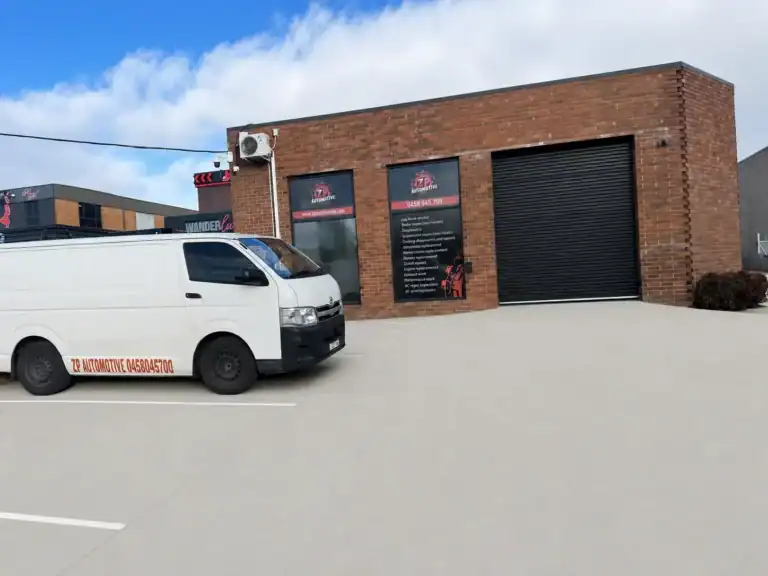
Air con servicing sits alongside our core strengths in logbook servicing, engine diagnostics, and honest advice. We’ve been working on Japanese vehicles for over a decade—we understand their design quirks, their common failure patterns, and what parts genuinely last versus what’s cut-price filler. When you bring your Toyota, Honda, Nissan, or Mazda in for an AC service, you’re dealing with a mechanic who’s done the job hundreds of times, not a service advisor reading from a script.
We use quality refrigerant and flushing supplies—Penrite and equivalent brands that won’t let you down. We don’t compete on being the cheapest; we compete on transparent pricing and explaining exactly what your system needs before you commit. If your AC just needs a recharge, we’ll say so. If the compressor is failing and replacement makes sense, we’ll walk through what that involves and what it costs, so you decide with full information.
Because we’re owner-operated and you work directly with the mechanic, you get honest advice without dealership labour rates or upsell pressure. Your Japanese vehicle’s warranty stays intact with logbook servicing—independent servicing like ours doesn’t void manufacturer coverage when work is done to OEM standards. We’ve earned a 5.0 rating from verified reviews because we show up, do the job right, and explain what’s wrong in plain English.
Schedule Your Japanese Vehicles Car Air Con Service at ZP Automotive
If your air con has stopped cooling or your vehicle is showing any of the warning signs above, call and book now or claim your free inspection at ZP Automotive in Mitchell. We’ll plug in the gauges, check pressures, find any leaks, and give you a clear picture of what needs to happen next—no surprises, no pressure.