Owner-Operated Workshop
Quality Parts & Oils
5.0★ Rating
Transparent Pricing

5.0 (Verified Reviews)

Professional Clutch Repair In Mitchell

A worn or slipping clutch only gets worse with time. We handle clutch repair in Mitchell with straight-up diagnostics, quality parts, and plain-English advice on what needs doing and what can wait.

Honest Advice

Quality Parts

5.0★ Rating

Quality Clutch Parts

Claim Your Free Check

Fill in the form and we'll get back to you promptly — no obligation.

Booking Form
  • Vehicle Details
  • Confirm Vehicle
  • Services
  • Contact Details
No Upsell Scripts
Quality Parts Used
Plain-English Advice

Why Book With Us

Claim Your Free Inspection
Drop Off Your Car
We Get to Work
Back on the Road

A clutch is what lets you change gears smoothly in a manual car. When it starts to wear out, you’ll usually feel it before anything fails completely. Clutch repair becomes necessary when the friction material on the clutch plate has worn down, or when parts like the pressure plate, release bearing, or master and slave cylinders start to give up. At our Mitchell workshop, we handle clutch work for everyday cars driven around north Canberra, and we’ll tell you straight what needs doing and what can wait a bit longer.

What Are The Signs Your Clutch Needs Repair?

Most clutch problems build up slowly, so you’ll often notice small changes before it leaves you stranded. Catching it early usually saves you money, because a worn clutch left too long can damage the flywheel and other parts around it.

  • Slipping the engine revs climb but the car doesn’t pick up speed the way it should, often worst when accelerating uphill or under load.
  • A high or spongy pedal the bite point creeps higher than it used to, or the pedal feels soft underfoot.
  • Difficulty getting into gear crunching, resistance, or trouble selecting first or reverse when stationary.
  • A burning smell that hot, acrid odour after driving in traffic usually means the clutch is slipping and overheating.
  • Shudder or judder the car vibrates or jerks as you let the pedal out from a standstill.
  • Noise when pressing the pedal a rattle or whirring that changes when you push the clutch in often points to a worn release bearing.

If you’re feeling any of these around Mitchell, Gungahlin, or the wider Canberra commute, it’s worth getting it looked at before the clutch gives out entirely.

What Does Clutch Repair Involve At ZP Automotive?

We start by confirming what’s actually wrong, because not every gear or pedal problem is the clutch itself. Sometimes it’s a hydraulic issue with the master or slave cylinder, or a cable adjustment, rather than a worn clutch plate. We road test the car where we can, check the pedal feel and bite point, and inspect the hydraulic system for leaks.

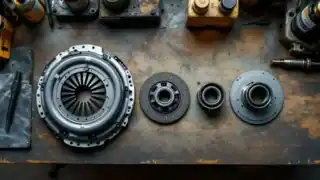
If the clutch needs to come out, that means dropping the gearbox to reach the assembly. While we’re in there, we inspect the full kit, the clutch plate, pressure plate, and release bearing, and check the condition of the flywheel. A worn or heat-damaged flywheel often needs machining or replacing, and we’ll always show you what we’ve found before doing extra work. We use quality parts rather than the cheapest no-name stock, and we’ll let you know what’s going into your car.

Once everything’s back together, we bleed the hydraulics if needed, set the pedal correctly, and test the gear changes before it goes back to you.

What Affects The Cost And Time Of Clutch Work?

Clutch jobs vary quite a bit depending on the car. Front-wheel-drive vehicles often take more labour because of how the gearbox sits, while some models need other parts moved out of the way first. A few things that change the price and turnaround:

  • Whether only the clutch kit needs replacing, or the flywheel and hydraulics as well.
  • How accessible the gearbox is on your particular make and model.
  • Parts availability, most common cars are quick to source, but some take a little longer.
  • Whether you’d prefer OEM-spec or quality aftermarket parts, which we’ll talk through with you.

Because a clutch is a bigger job, we give you a clear rundown before we start, what’s worn, what it’ll cost, and what’s optional. No surprises when you come to pick the car up.

Why Choose A Local Mitchell Workshop For Your Clutch?

We’re an independent, owner-operated workshop, and you deal directly with the mechanic doing the work. There’s no service advisor in the middle and no upsell script. Brendan has more than 10 years in the trade, and the promise here is simple: quality work, honest advice, and a fair price without dealership labour rates.

We explain things in plain English so you know exactly what’s happening with your car. Alongside clutch repair, we look after brakes, logbook servicing that keeps your manufacturer warranty intact, ACT rego inspections, air conditioning servicing, and engine diagnostics. If your clutch finally lets go and you’re stuck, we also offer roadside and lockout assistance around the local area.

If you’ve noticed any of the warning signs above, use Call & Book Now to book it in, or Claim Your Free Inspection online. We’ll have a proper look and let you know where things stand for drivers across Mitchell and north Canberra.
Other Services

Whatever your needs we have you covered, see some similar services below or click "See All Services" to explore our full service offering.

Honest Mechanics, Fair Prices in Mitchell

Owner-operated and family-run, we give you straight answers, quality parts, and fair pricing without the dealership markup or the upsell scripts.

You Deal With the Mechanic

Talk directly to the owner — no service advisors, no middlemen, no upsell pressure.

Quality Parts, Honest Pricing

Bring your vehicle in and we’ll assess what’s needed before any work begins.

Clutch Work Done Right First Time

A botched clutch job means pulling it apart twice — we get it right first go.

How Clutch Repair Works at ZP Automotive

Clutch repair at ZP Automotive follows a clear four-step process so you know exactly what to expect from first contact to driving away.

Step 1

Claim Your Free Inspection

Call and book now or claim your free inspection to tell us what your clutch is doing and when symptoms started.

Step 2

Clutch System Assessment

We check clutch pedal feel, engagement point, and freeplay, then inspect the friction disc and pressure plate for wear.

Step 3

Clutch Replacement and Rebuild

We replace worn parts using quality components, resurfacing or replacing the flywheel to restore full drive.

Step 4

Road Test and Handover

We road test the vehicle to confirm smooth, confident engagement before calling you to collect your car.

What Our Customers Say

5.0 (Verified Reviews)

Quality Parts From Trusted Suppliers

We use quality oils and parts from reputable suppliers — including Penrite and Rico — because what goes into your car matters as much as the work itself.

Claim Your Free Check

Fill in the form and we'll get back to you promptly — no obligation.

Booking Form
  • Vehicle Details
  • Confirm Vehicle
  • Services
  • Contact Details
No Upsell Scripts
Quality Parts Used
Plain-English Advice

Why Book With Us

Claim Your Free Inspection
Drop Off Your Car
We Get to Work
Back on the Road

Got Questions? We Have Answers

Browse the common questions below. If yours isn't listed, give us a call and we'll give you a straight answer.

The most common signs are a slipping clutch, where the engine revs climb but the car doesn’t accelerate properly, a spongy or high biting point on the pedal, difficulty getting into gear, or a burning smell after hill starts. Some drivers also notice shuddering when pulling away from a stop. If any of these sound familiar, it’s worth getting the clutch inspected sooner rather than later, as catching it early can mean a repair rather than a full replacement.

Not for long. A slipping clutch means the engine’s power isn’t being transferred to the wheels properly, which makes overtaking and hill driving genuinely risky. Left too long, it can also cause heat damage to the flywheel, turning what might have been a straightforward job into a more involved one. If your clutch is slipping noticeably, get it looked at promptly rather than waiting for it to fail completely.

It depends on what’s actually worn or damaged. A typical clutch repair or replacement involves removing the gearbox to access the clutch assembly, then inspecting and replacing the clutch plate, pressure plate, and release bearing as needed. We also inspect the flywheel for scoring or heat damage while we’re in there. If the flywheel is salvageable, it gets resurfaced; if not, replacement is the better long-term call. We use quality parts and walk you through exactly what needs doing before any work starts.

For most passenger cars, a clutch replacement is typically a full day’s work. Some vehicles are more straightforward and come in under that; others with more complex drivetrain layouts take longer. We’ll give you a realistic timeframe when you bring the car in, so you can plan around it. Same-day turnaround is possible in many cases, but we won’t rush a job that needs proper time.

Several things influence the price: the make and model of the vehicle, how accessible the clutch is (some cars require significantly more labour to reach), whether the flywheel needs resurfacing or replacing, and the quality of parts used. We use quality components rather than cheap no-name stock, because a clutch done right should last. We’ll give you a clear quote before any work begins, so there are no surprises.

Generally, no. Under Australian consumer law, ACCC guidance indicates that manufacturers cannot require you to use their dealership for servicing as a condition of maintaining your warranty, provided the work is carried out to the manufacturer’s specifications using suitable parts. This is general information, not legal advice, and we’d encourage you to check your specific warranty terms if you’re unsure. We service vehicles in Mitchell and across Canberra and can discuss your situation when you call.

Driving habits have the biggest influence. Riding the clutch (keeping your foot partially on the pedal), frequent stop-start traffic, towing heavy loads, and aggressive hill starts all accelerate wear. Fluid contamination from a leaking rear main seal can also damage the clutch plate. Occasionally it comes down to a manufacturing variation or a previous repair that wasn’t quite right. We see a range of causes regularly, and identifying the root cause is part of what we check during the inspection.

In most cases, we recommend replacing the full clutch kit: the clutch plate, pressure plate, and release bearing together. Since accessing the clutch requires removing the gearbox, it makes practical sense to replace all the wear items at once rather than finding yourself back in the same position in 12 months. We’ll always explain what we’ve found and what we recommend, so the final decision is yours.

On a typical passenger car driven mostly on the highway, a clutch can last well over 150,000 kilometres. City driving with a lot of stop-start traffic, or regular towing, will shorten that significantly. There’s no fixed service interval for clutches like there is for oil or brake fluid, as they’re replaced when worn. Good driving habits make a real difference to how long a clutch holds up.

We start with a test drive to feel how the clutch is engaging and where the biting point sits. From there, we check for any obvious external issues like fluid leaks that could be contaminating the clutch. If we need to go further, we’ll remove the gearbox for a direct inspection of the clutch components. At our Mitchell workshop, we explain what we find in plain terms before quoting anything, so you understand exactly what’s going on with your car.

Occasionally a clutch issue is caused by something other than worn friction material, such as a faulty master or slave cylinder, a stretched cable on older vehicles, or a misadjusted clutch pedal. These can sometimes be repaired or adjusted without a full clutch replacement. That said, if the friction plate itself is worn, replacement is the right call. We diagnose first, so you’re not paying for parts you don’t need.

A soft or sinking clutch pedal usually points to a hydraulic problem, typically air in the clutch hydraulic line, a failing master cylinder, or a leaking slave cylinder. This is different from mechanical clutch wear and needs to be diagnosed properly. Driving with a pedal that sinks to the floor is not safe, as you can lose the ability to disengage the gearbox reliably. Book it in promptly and we’ll track down where the fault is.

Continue to site