A clutch that’s starting to slip, grab, or feel notchy is telling you something. For owners of Japanese vehicles, understanding clutch repair and knowing when to act can save you from a roadside breakdown. Japanese Vehicles Clutch Repair in Mitchell addresses one of the most common wear items on manual transmissions, and catching the problem early makes a real difference to your wallet and your car’s reliability.
Signs Your Japanese Vehicle’s Clutch Needs Attention
The clutch is a wear item, not a forever part. How you drive, how much city traffic you sit in, and how long you’ve owned the car all affect how quickly it wears. Here are the real warning signs that it’s time for a clutch inspection and repair.
- The pedal feels softer or sits lower than it used to, even after you’ve adjusted it
- The engine revs but the car accelerates slowly, especially when pulling away from a stop or climbing a hill
- A burning smell under the bonnet, especially during heavy traffic or towing
- The clutch pedal feels stiff or hard to press, or it’s become noisy when you press it in
- Difficulty shifting gears smoothly, grinding when you select reverse, or the lever moving freely without catching
- A vibration or shudder through the floor when you release the clutch from a standstill
Japanese vehicles, whether Toyota, Mazda, Honda, Nissan, or Mitsubishi, tend to show these signs clearly once wear accelerates. Don’t ignore them. A slipping clutch gets worse, not better, and continuing to drive on a failing one risks damage to the flywheel or gearbox.
What Happens During a Japanese Vehicles Clutch Repair
We start with a proper diagnostic. That means getting under the car, inspecting the clutch linkage and hydraulic components if your vehicle uses them, and listening to you describe exactly how it’s behaving. Many Japanese vehicles use cable-operated or hydraulic clutch systems, and the failure point matters.
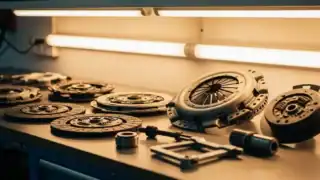
If the problem is wear on the friction plate itself, we’ll remove the gearbox to access the clutch assembly. This is where the detail work begins. We inspect the pressure plate, the release bearing, and the flywheel. Some vehicles need flywheel resurfacing; others need a complete kit replacement. We follow OEM service schedules and use parts that meet your vehicle’s original specifications.
For Japanese models, clutch kits come in different qualities and pressure-plate settings depending on the engine size and transmission type. We use quality parts that match your vehicle’s design, not generic aftermarket kits that compromise performance or longevity. The hydraulic components, if your vehicle has them, are inspected for leaks and wear. If the master or slave cylinder is failing, replacing just the friction plate won’t solve the problem.
Once everything is installed, we bleed the hydraulic system if needed, adjust the cable tension to spec, and test drive the vehicle to confirm smooth engagement, full bite, and no slip or drag. You’ll feel the difference immediately.
What Affects Clutch Repair Cost and Timeframe
Several factors shape both the cost and how long the repair takes. The most obvious is what’s actually failed. A worn friction plate is one job; a worn plate plus a damaged pressure plate or scored flywheel is a bigger, more expensive repair. Some flywheels can be resurfaced; others need replacement.
Vehicle model and accessibility matter too. A clutch on a Mazda 3 comes out differently than one on a larger sedan or ute, and labour time varies. Parts availability for common Japanese models is usually straightforward, but some older or imported variants may take longer to source.
We use quality parts—Penrite oils and fluids for any hydraulic work, and original-spec or equivalent parts that stand up to real-world driving. We don’t fit the cheapest no-name kit just to hit a lower quote. That approach costs you more in the long run.
Rather than guessing at cost or timeframe, we’ll inspect the clutch, show you what we’ve found, and give you a transparent breakdown of parts and labour before we start. No surprises, no upsell. If something can wait, we’ll tell you.
Why Choose ZP Automotive for Your Japanese Vehicles Clutch Repair
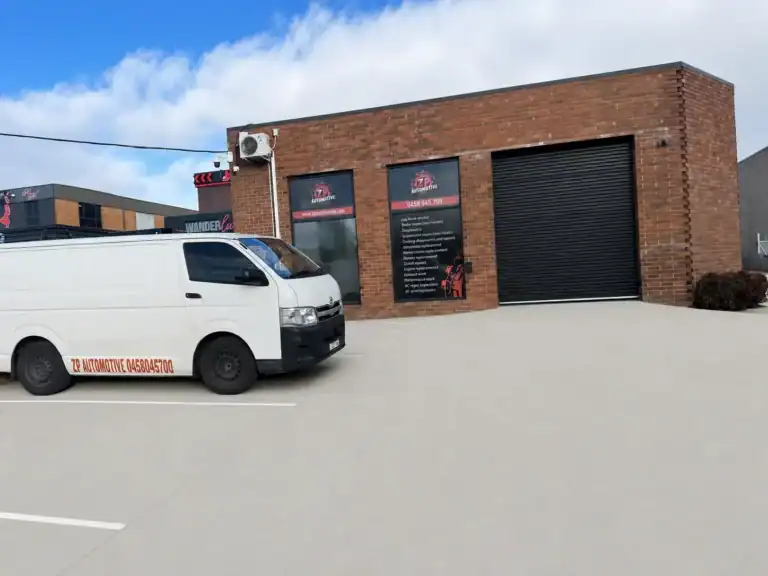
We’re an independent, owner-operated workshop in Mitchell run by Brendan, who’s been in the trade for over 10 years. That means you deal directly with the mechanic doing your clutch repair, not a service advisor reading from a script or a dealership with labour rates that assume you have an unlimited budget.
We specialise in logbook servicing and can carry out your Japanese vehicle’s scheduled maintenance while maintaining your manufacturer warranty. If your vehicle is under warranty, clutch repair is often a wear-item exception, but we understand the paperwork and make sure you stay covered for everything else.
Our approach is honest, plain-English, and fair. We explain what’s worn, what it’ll cost, what it needs to be safe and reliable, and what can wait a few months if budget is tight. We use quality parts because corners cut on a clutch kit show up the moment you drive the car. For Japanese vehicles, we follow OEM service schedules and specifications because those vehicles were engineered to run on specific parts and fluids.
We also handle other critical services including air conditioning servicing, engine diagnostics, logbook servicing, and wrong-fuel recovery. Whether your Japanese vehicle needs a full service or a single repair, you’ll get the same straightforward advice and fair pricing.
Book Your Clutch Inspection in Mitchell Today
If your clutch is slipping, grabbing, or burning, or if you’re just not sure whether it needs attention, call us or book a free inspection online. We’ll get your Japanese vehicle back to feeling responsive and reliable. Call & Book Now or Claim Your Free Inspection to arrange your appointment at ZP Automotive in Mitchell.