Shock absorbers do more than smooth out bumps. They keep your Mitsubishi stable under braking, prevent excessive bouncing after hitting a pothole, and help your tyres stay in contact with the road surface. When they wear out, your vehicle becomes harder to control, especially in wet conditions or emergency stops. If you’re experiencing a rougher ride, excessive body roll in corners, or bouncing that takes several seconds to settle, Mitsubishi shock absorber replacement is likely overdue. We see this regularly at our Mitchell workshop, and catching worn shocks early prevents damage to other suspension components and keeps your car safe on Canberra roads.
Signs Your Mitsubishi Shocks Need Replacement
Worn shock absorbers produce several clear warning signs. The most obvious is a noticeably bouncy ride, especially after driving over a bump or pothole. Your Mitsubishi might feel like it’s floating rather than planted, or it may take several oscillations to settle after hitting uneven pavement. You might also notice the vehicle leaning heavily to one side during cornering, or the nose diving forward when you brake hard. Some drivers report a clunking sound from the suspension when driving over rough roads, or a feeling that the steering has become less responsive.
Another telling sign is uneven tyre wear. When shocks are failing, your tyres don’t maintain consistent contact with the road surface, causing accelerated or patchy wear on the tread. If your tyres are wearing faster than expected or showing unusual wear patterns, that’s a strong indication that your suspension needs attention. Mitsubishi models, particularly the Triton and Outlander, are prone to accelerated shock wear in rough driving conditions, so if you frequently drive on unsealed roads or through hilly terrain around the ACT, check your shocks more frequently than standard intervals suggest.
What Happens During Mitsubishi Shock Absorber Replacement
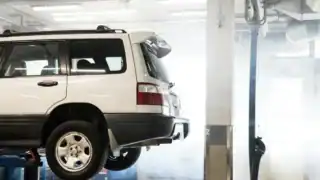
We start by lifting your vehicle safely and conducting a full suspension inspection. This includes checking the physical condition of each shock absorber for signs of leaking fluid, corrosion, or damage to the rod or housing. We also test shock performance by pushing down on each corner of the vehicle and observing how quickly it returns to its resting position. A functioning shock should resist movement and return smoothly; a worn shock will feel soft and return slowly or with excessive bouncing.
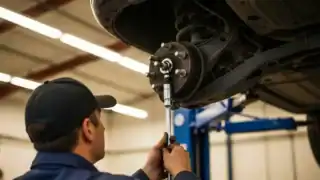
Next, we disconnect the shock from its mounting points. Depending on your Mitsubishi model, this usually involves removing bolts from the upper tower mount and lower control arm or strut assembly. Once removed, we install the replacement shocks, ensuring they’re the correct Mitsubishi specification. We use quality shock absorbers that match your vehicle’s original specifications, maintaining the ride quality and handling characteristics Mitsubishi engineered into your model.
After installation, we secure all bolts to the correct torque specifications, reconnect any anti-roll bar links or sensor harnesses, and lower the vehicle. We then perform a test drive to confirm the suspension feels responsive, the ride is smooth, and there are no unusual noises. We also check wheel alignment if your shocks have been affecting tyre wear, as this prevents future premature wear on fresh shocks.
Cost and Time Factors for Shock Replacement
The cost of Mitsubishi shock absorber replacement depends on several factors. Whether you need shocks for the front axle, rear axle, or all four corners affects both parts cost and labour time. Some Mitsubishi models, like the Outlander, have more complex suspension geometry that takes longer to access. The choice between OEM-specification shocks and quality aftermarket alternatives also influences price. We stock and recommend quality parts that perform reliably without dealership markups, but we’ll always explain your options upfront so you know exactly what you’re paying for.
Parts availability can vary slightly depending on your specific Mitsubishi model and year. Most commonly serviced models have shocks in stock, but less common variants may take a day or two. Labour time typically ranges from a few hours to a full afternoon, depending on model complexity and whether additional suspension work is needed. We’ll confirm availability and timeframe when you call or book, so there are no surprises.
Why Choose ZP Automotive for Your Mitsubishi Suspension Work
You’re dealing directly with a mechanic who knows Mitsubishi vehicles inside out, not a service advisor reading from a script. With over ten years in the trade, we’ve replaced shocks on Tritons, Outlanders, Lancers, and Mirages, and we understand the common wear patterns and model-specific quirks. We use quality parts aligned to Mitsubishi specifications, never cutting corners with no-name stock just to hit a target margin. Your vehicle’s handling and safety matter more to us than the cheapest possible repair.
Our pricing is transparent and fair. You get workshop labour rates, not dealership prices, and we explain what’s wrong, what it’ll cost, and what can wait. If your shocks are wearing but not critical, we’ll tell you that too. We’re owner-operated and family-run, which means we take pride in every job and stand behind our work. We also handle logbook servicing to keep your manufacturer warranty intact, air conditioning servicing, engine diagnostics, and roadside assistance including wrong-fuel recovery and vehicle lockout support.
Book Your Mitsubishi Shock Absorber Replacement in Mitchell
If you’ve noticed your Mitsubishi bouncing excessively or feel like it’s lost its handling crispness, the next step is a proper suspension inspection. Call us to Call & Book Now or claim your free inspection online to arrange a time that suits you. We’ll diagnose your suspension, explain what needs doing, and get your Mitsubishi riding and handling like it should.