Suzuki suspension repair isn’t something most drivers think about until they feel it. A clunk over a pothole, a sag at one corner, or a steering wheel that seems to wander on the motorway—these are the moments you realise your suspension needs attention. We see Suzuki vehicles regularly at our Mitchell workshop, from Swift city runabouts to Vitara SUVs, and suspension issues are one of the most common repairs that land on the bench. A well-maintained suspension keeps your car stable, your tyres in contact with the road, and your passengers safe. Neglect it, and you’re risking uneven tyre wear, brake problems, and a vehicle that’s genuinely unsafe to drive.
Common Signs Your Suzuki Suspension Needs Repair
Suspension problems don’t always announce themselves loudly. Sometimes it’s a feeling—a soft, bouncy response that takes longer than usual to settle after bumps. Other times it’s unmissable: a grinding noise when turning, a clunking sound from underneath the car, or visible sagging at one side of the vehicle. Some owners notice their Suzuki pulling to one side during normal driving, or they find themselves gripping the steering wheel tighter to keep the car straight.
- Clunking or creaking noises over bumps or from the wheel area
- The car sits lower on one side, or visibly leans when parked
- Bouncy or vague steering response—the car doesn’t feel planted on the road
- Uneven tyre wear, especially at the inner or outer edge
- The car takes longer to settle after driving over a bump
- Grinding sounds when turning the steering wheel
- Excessive movement or swaying when braking or cornering hard
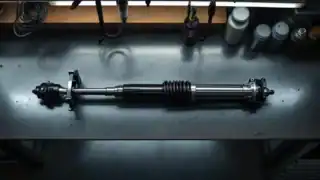
If you notice any of these, Suzuki suspension repair is due. The suspension system in Suzuki models typically includes struts, shock absorbers, anti-roll bars, control arms, and bushings. Each part wears over time, especially on Australian roads where rough surfaces and corrugations are common. Ignoring early warning signs often leads to more expensive repairs down the track—a worn bush becomes a damaged strut, which then accelerates tyre wear and affects braking performance.
What a Suzuki Suspension Inspection Involves
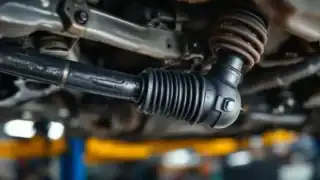
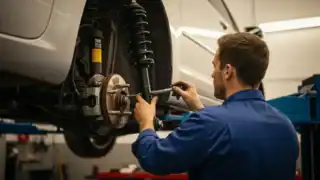
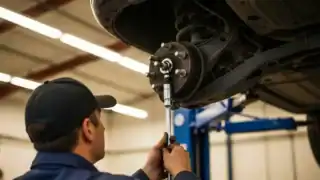
When you bring your Suzuki in for suspension repair, we start with a thorough visual and physical inspection. The vehicle goes on the hoist, and we check every component: struts and shocks for leaks or damage, bushings for cracking or excessive play, control arms for bending or wear, and anti-roll bars for cracks. We grasp each wheel and apply firm pressure—sideways, up and down—to feel for loose or worn joints. This tactile feedback often reveals problems that a visual inspection alone would miss.
Suzuki vehicles, particularly the Swift and Vitara models, follow specific suspension geometries. We’re familiar with where wear typically shows up in these models and what OEM Suzuki spec means for parts selection. If we identify worn components, we’ll explain exactly what we found, why it needs replacing, and what the alternatives are—whether that’s genuine Suzuki parts or quality aftermarket equivalents that meet the same standard.
We also check tyre wear patterns and wheel alignment as part of the diagnosis. Suspension problems almost always show up in how the tyres are wearing. Worn shocks might cause the outer edge to wear faster; worn bushings might create a toe-in issue that chews up the inner edge. Understanding the wear pattern helps us pinpoint the root cause rather than just replacing the most obviously worn part.
Cost and Timeframe Factors in Suzuki Suspension Repair
The cost of repairing a Suzuki suspension depends on several real variables. Are you replacing worn shock absorbers on both sides, or just one? Are the bushings damaged, or are the control arms bent? Do you need new brake components because suspension wear has affected your braking? Parts availability plays a role too—genuine Suzuki suspension components are usually quick to source, though aftermarket alternatives may arrive faster or at lower cost depending on the specific part.
Vehicle age and mileage affect pricing as well. A Swift with 200,000 kilometres might have more corrosion on suspension fasteners, making removal and reassembly slower. A newer Vitara with 80,000 kilometres might be a straightforward strut replacement. We quote fairly based on what the job actually requires, not on guessing. You’ll know what’s needed, what it costs, and how long it’ll take before we start.
Quality matters here. We use Penrite fluids and trusted parts suppliers—not the cheapest no-name stock. A suspension repair isn’t something to skimp on; it directly affects safety. Doing the job right the first time means you won’t be back with a new problem in six months.
Why Choose ZP Automotive for Your Suzuki Suspension Repair
You’re dealing directly with the mechanic doing the work—no service adviser, no upsell scripts, no dealership labour rates. With 10 years in the trade, we’ve seen what works and what doesn’t on Suzuki vehicles. We explain what’s wrong, what it’ll cost, and what can wait. If a bush can limp along a bit longer while you save for the full suspension overhaul, we’ll tell you. If something’s a safety risk, we’ll be direct about that too.
As an independent, owner-operated workshop, we don’t have the overhead of a dealership service department. That means fair, transparent pricing and honest advice. We’re here to keep your Suzuki safe and reliable, not to chase the biggest bill we can write. You deal directly with us—no middlemen between you and the person who knows your car.
Book Your Free Suzuki Suspension Inspection in Mitchell
If your Suzuki’s suspension feels off, or you’ve noticed any of the warning signs above, call and book now or claim your free inspection online. We’ll put the car on the hoist, run through a proper diagnosis, and let you know exactly what’s needed. You’re welcome to come in and chat about the findings before we start any work. Get in touch today and find out what’s going on with your suspension.