Hyundai suspension repair is one of the most important services we perform at our Mitchell workshop. Your suspension system does far more than smooth out bumps in the road — it keeps your wheels in contact with the pavement, manages your vehicle’s weight during cornering and braking, and protects your safety and your passengers’ safety. When suspension components wear or fail, your Hyundai becomes less stable, harder to steer, and more prone to uneven tyre wear. Early diagnosis and repair prevent larger, costlier failures down the track.
Warning Signs Your Hyundai Needs Suspension Repair
Suspension wear doesn’t always announce itself loudly, but once you know what to listen and look for, the signs become obvious. If your Hyundai dips or bounces excessively when you hit a pothole, or if it takes longer than normal to settle after hitting a bump, your shock absorbers or struts are likely worn. Uneven tyre wear – particularly on the inner or outer edges – almost always points to a suspension alignment or component issue. A clunking sound from underneath the car, especially over rough roads or when turning, suggests worn bushings, ball joints, or anti-roll bar links.
- Steering wheel pulling to one side during normal driving
- Loose, wandering, or overly responsive steering feel
- Visible damage, leaks, or sagging on one corner of the vehicle
- Increased road noise or vibration through the steering wheel
- Vehicle sits noticeably lower on one side than the other
Hyundai models – particularly i30, Elantra, and Tucson variants – can develop worn control arm bushings or strut mounts over time, especially in Mitchell’s variable weather and road conditions. Don’t ignore these signs. A suspension fault that seems minor today can affect braking performance and handling within weeks.
How Hyundai Suspension Repair Works
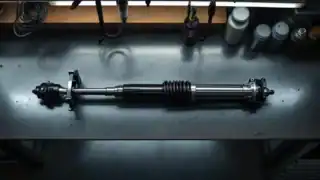
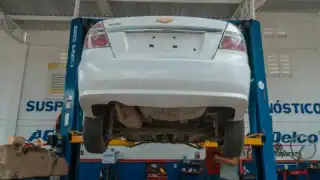
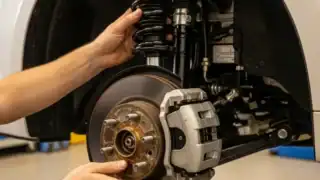
Our first step is always a thorough inspection. We lift your Hyundai safely and visually examine every suspension component – struts, shock absorbers, springs, control arms, ball joints, bushings, anti-roll bar links, and steering tie rods. We look for cracks, corrosion, oil leaks from shocks or struts, and excessive wear. We also check brake hoses and lines for damage, since suspension faults often affect braking efficiency.
Next, we perform a bounce test and steering check to confirm component condition. For many Hyundai owners, worn struts are the culprit – these pressurised units gradually lose their dampening ability and need replacement. Control arm bushings, which are rubber components that allow movement while isolating vibration, wear out and cause clunking sounds and steering sloppiness. Ball joints, which connect the steering knuckle to the control arm, can become loose or seized.
We use Hyundai service manuals and our hands-on experience with the brand to diagnose accurately. Because Hyundai suspension architecture varies across model generations, we take time to understand your specific vehicle’s design and common failure points. Once we’ve identified the faulty components, we explain exactly what needs replacement and why – no upselling, no unnecessary parts.
Parts replacement follows Hyundai specifications. We use quality replacement components matched to your vehicle’s original design, whether OEM-equivalent or quality-assured aftermarket parts. We’ll always show you what came out and explain the difference between options before we begin. Once parts are installed, we perform a test drive to confirm the repair has resolved the original problem.
Cost and Time – What to Expect
Suspension repair cost depends heavily on which components have failed and whether they’re single replacements or a combination. A single strut replacement takes less labour and fewer parts than a full control arm assembly with bushings, ball joint, and tie rod. Genuine OEM Hyundai parts will cost more than equivalent aftermarket alternatives, but both can deliver reliable results.
Turnaround time varies too. A straightforward strut replacement might be completed in a day. A more complex job involving multiple control arm components, alignment check, or wear to multiple corners of the vehicle can take longer. We’ll always give you an honest estimate of parts availability and time before we start. If parts need ordering, we’ll let you know the wait rather than keeping you guessing.
Because we’re owner-operated and independent, we don’t carry the labour costs of large dealership service departments. You pay for quality work, not corporate overhead – a genuine difference when facing a suspension repair bill.
Why Choose Our Mitchell Workshop for Hyundai Suspension Repair
We’ve spent over a decade working on Hyundai vehicles, and suspension systems are one of our core strengths. We know how Hyundai suspensions age, what components fail first on each model, and how to diagnose problems accurately without replacing parts you don’t need. You deal directly with the mechanic doing the work – no service advisor, no upsell scripts, no dealership labour rates.
We use quality parts – Penrite oils and reputable component brands – because cheap no-name replacements fail quickly and cost you more in the long run. Our pricing is transparent. We’ll show you the quote before we start, explain what’s included, and tell you honestly what can wait and what needs attention now.
If you’re running a logbook service on your Hyundai, we maintain your manufacturer warranty through independent servicing. Your vehicle’s warranty stays intact when you choose a qualified independent mechanic – and we’re equipped and experienced to keep that promise.
Book Your Hyundai Suspension Inspection in Mitchell Today
If your Hyundai is showing suspension symptoms, or if you’d simply like peace of mind about your vehicle’s handling and safety, Call & Book Now or Claim Your Free Inspection. We’ll diagnose the issue and give you a clear, honest assessment of what’s needed. Our Mitchell team is ready to get your suspension back to safe, responsive condition.