Japanese vehicles suspension replacement is one of the most important safety services you can have done. Your suspension keeps your car planted on the road, absorbs bumps, and lets your brakes and steering do their job properly. When suspension components wear out or fail, every other system on the vehicle becomes less reliable. We see Japanese vehicles suspension replacement work regularly at our Mitchell workshop, and it’s always a job worth doing right the first time.
Warning Signs Your Japanese Vehicle Needs Suspension Replacement
The symptoms of worn suspension are usually impossible to miss. If you’re noticing any of these, it’s time to have the suspension inspected properly:
- Clunking or knocking sounds from underneath, especially over bumps or when turning
- The car dips or leans heavily to one side when you corner
- Bouncing that doesn’t settle after you hit a pothole or speed bump
- Steering feels loose, vague, or wanders at highway speeds
- Uneven tyre wear, particularly on the inside or outside edges
- The ride feels harsher than normal, or every bump jolts through the cabin
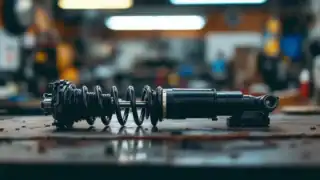
- Visible damage to shock absorbers, struts, or springs when you look underneath
Japanese vehicles from manufacturers like Toyota, Honda, Mazda, Nissan, and Subaru are generally well-engineered, but suspension components still wear at predictable rates. Most struts and shock absorbers start to lose effectiveness between 80,000 and 120,000 kilometres. Control arm bushes, sway bar links, and ball joints often last longer, but rough roads or years of neglect can accelerate wear considerably.
How We Diagnose and Replace Japanese Vehicle Suspension Components
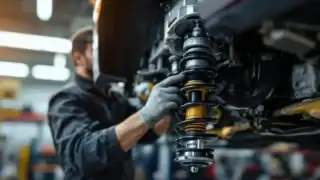
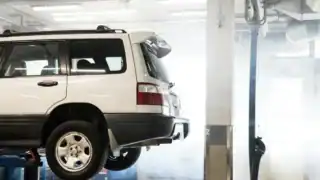
We don’t replace suspension parts on guesswork. Every suspension inspection starts with the car on a hoist and a hands-on check of every major component. We flex and move suspension arms, test for play in ball joints, listen for creaks in bushes, and measure shock absorber resistance where the design allows it. For Japanese vehicles, this process follows the manufacturer’s inspection schedules and identifies which parts are actually worn versus which ones still have life left in them.
Once we’ve identified what needs replacing, we talk you through it. Some shops will quote you an entire suspension rebuild when half the components are still serviceable. We explain what’s actually failed, what’s close to failing, and what can wait another season. Most of the time, that honest approach saves our customers money.
The replacement process itself varies depending on which components are worn. Strut replacement on a Toyota or Mazda involves removing the wheel, unbolting the strut assembly, and installing a new unit that’s properly aligned. Control arm and ball joint work requires more precision because geometry matters. We use quality parts that match OEM specifications for Japanese vehicles. We’re not using the cheapest no-name stock from an overseas supplier. Parts like Penrite suspension fluids and properly specified shock absorbers are what keep your car handling safely.
After replacement, we road test the vehicle and check the wheel alignment. Suspension work always affects your alignment angles, and proper alignment protects your tyres and handling for the long term.
What Affects Japanese Vehicles Suspension Replacement Cost and Timeframe
Several factors influence how long suspension work takes and what it’ll cost. The first is which components have failed. Replacing a single shock absorber is a straightforward job. Replacing both sides of the suspension with new shocks, struts, bushes, and control arms is a bigger project. The second factor is parts availability. Genuine Japanese manufacturer parts are usually in stock or available quickly, but some specialist components can take a few days. We always discuss sourcing options and lead times upfront, so you’re not surprised.
Vehicle condition matters too. Some cars have seized bolts, rust damage, or corrosion that makes removal slower. Older vehicles or those used on rough roads sometimes need extra work to get everything apart safely. We’ll let you know if that’s the case before we start charging labour.
The choice between genuine parts and quality aftermarket alternatives also affects cost. Both are fine for Japanese vehicles, but they’re priced differently. We’ll quote you both options and let you decide what suits your budget and how long you plan to keep the car.
Why ZP Automotive is Your Best Choice for Suspension Work in Mitchell
We’ve been doing suspension work for over 10 years, and we understand how Japanese vehicles are put together. Suspension replacement isn’t something you learn once and move on. Every manufacturer has slightly different geometry, torque specs, and alignment tolerances. We stay current with those details because getting them right matters for safety and longevity.
You’ll deal directly with the mechanic doing the work. There’s no service advisor, no upsell script, no pressure to replace things that don’t need replacing. We explain what’s wrong, what it’ll cost, and what can wait. If you choose to logbook service your vehicle with us, that warranty stays intact. We use quality parts and fluids that meet specification, not the cheapest alternative. Fair pricing without dealership labour rates is how ZP Automotive operates.
Suspension work touches safety. We don’t take shortcuts, and we don’t rush it. Our 5.0 verified reviews reflect that commitment to doing the job properly every single time. We also offer wrong-fuel recovery, vehicle lockout assistance, engine diagnostics, air conditioning servicing, and logbook servicing to keep your manufacturer warranty intact.
Book Your Japanese Vehicles Suspension Inspection at ZP Automotive
If your Japanese vehicle is showing any of the warning signs above, the next step is a proper inspection. Call & Book Now or claim your free inspection online, and we’ll get the car on the hoist and tell you exactly what’s happening underneath. No obligation, no pressure, just honest advice about what needs doing now and what can wait. ZP Automotive in Mitchell is ready to help.