Land Rover transmission repair is one of those services that hits different when you’re driving a vehicle built for serious work and serious distance. Unlike standard family cars, Land Rovers are designed to handle rough terrain, towing loads, and sustained driving in demanding conditions. When something goes wrong with the gearbox or automatic transmission, you need someone who understands how Land Rover builds and expects these systems to perform. In Mitchell, we see Land Rover transmission issues regularly enough to know the warning signs, the common failure points, and exactly how to diagnose and fix them without unnecessary guesswork.
Common Land Rover Transmission Warning Signs
Land Rover transmission problems rarely announce themselves with a bang. Instead, they usually start small and get progressively more obvious. You might notice your automatic transmission hesitating or jerking when shifting between gears, especially during acceleration or when pulling away from a stop. Some owners report a slight delay before the gearbox engages when moving from Park to Drive, or a grinding sensation that wasn’t there before.
Other red flags include transmission fluid leaking underneath your vehicle (you’ll see dark reddish puddles under the rear of the engine), a burning smell coming from beneath the bonnet or around the transmission area, or warning lights appearing on your dashboard. If your Land Rover slips into neutral unexpectedly, struggles to stay in gear, or makes whining or chattering noises while driving, these are all signs that internal transmission components may be wearing or failing.
- Rough or delayed gear shifts
- Transmission fluid leaks
- Burning smell from the engine bay
- Warning lights on the dashboard
- Slipping or loss of power while driving
- Unusual grinding or whining noises
The longer you drive with these symptoms, the more likely internal damage becomes. Land Rover gearboxes are built to last, but they’re also complex, and small problems compound quickly once fluid levels drop or internal seals start to fail.
How We Diagnose and Repair Land Rover Transmissions
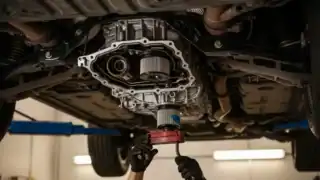
Our approach to Land Rover transmission repair starts with a thorough diagnostic. We connect your vehicle to specialist diagnostic equipment that reads the transmission control module and identifies fault codes. This tells us immediately whether the issue is a simple fix like a fluid level correction or sensor replacement, or something more involved like internal wear or a failing clutch pack.
We then physically inspect the transmission pan, fluid colour and condition, and external seals and connections. Land Rover transmissions benefit from condition-based servicing rather than just age-based intervals, so we assess wear patterns and fluid breakdown to determine the actual state of health. If the fluid is dark, burnt, or contains metal particles, we know internal damage has already begun.
Depending on what the diagnostics reveal, repair options might include fluid and filter replacement with a fresh fill of OEM-specification transmission fluid, seal replacement if leaks are the culprit, or solenoid and valve body work if electronic control is the problem. More severe cases involving internal gear or bearing wear require full transmission overhaul or replacement. We’ll explain what we find in plain terms and outline your options before we start any work.
Land Rover automatic gearboxes and manual gearbox repairs both demand precision and the right parts. We use quality fluids and seals matched to your specific Land Rover model and year, not generic aftermarket stock that might degrade performance or void your warranty. If your vehicle is still under manufacturer warranty, logbook servicing and genuine-equivalent repair parts keep that protection intact.
What Affects Repair Cost and Timeline for Land Rover Transmission Work
Transmission repair costs depend on several factors we assess once diagnostics are complete. A simple fluid leak and seal replacement is far less expensive and takes less time than rebuilding internal components or replacing the entire gearbox. Parts availability also matters: some Land Rover models have faster lead times for OEM parts than others, but we source quality equivalent parts that meet Land Rover specifications without excessive delays.
The severity of damage matters most. If we catch an issue early, a fluid change and sensor replacement might resolve it in a day. If internal wear has progressed, a partial rebuild or full replacement extends both timeline and cost. We’ll give you a realistic estimate once we’ve completed the full inspection and will discuss whether it makes sense to repair, rebuild, or replace based on your vehicle’s age, mileage, and intended use.
We stock Penrite transmission fluids and use quality seals and gaskets rather than cheap no-name alternatives. This costs more upfront but gives you better durability and performance. Land Rovers deserve proper servicing, and cutting corners on transmission fluid or seals is a false economy.
Why Land Rover Owners in Mitchell Choose Our Workshop
You’re not dealing with a service adviser reading from a script or a dealership labour rate that charges three times the actual diagnostic cost. We’re an independent, owner-operated workshop where you work directly with the mechanic who’ll be fixing your Land Rover. Brendan has over ten years in the trade and understands how Land Rovers work. We explain what’s wrong, what it’ll cost, and what can wait, without upselling parts you don’t need or pressure to do extra work.
Our approach is fair, transparent pricing without the corporate overhead. We’ve built our reputation on honest advice and quality work rather than trying to be the cheapest option in town. Your Land Rover transmission repair comes with the confidence that we’ve used the right diagnostic tools, sourced quality parts, and done the job properly the first time.
Next Steps for Your Land Rover Transmission
If you’ve noticed any of these symptoms or your transmission warning light is on, the sooner you get it checked, the better. Call & Book Now or Claim Your Free Inspection at our Mitchell workshop to have us diagnose what’s happening and give you a clear plan forward. We’ll be straight with you about what needs to happen next.