Owner-Operated Workshop
Quality Parts & Oils
5.0★ Rating
Transparent Pricing

5.0 (Verified Reviews)

Licensed & Insured Subaru Timing Belt Replacement In Mitchell

Timing belt replacement is critical maintenance for your Subaru. We diagnose wear, replace with quality parts, and verify everything runs smoothly. Claim Your Free Inspection.

Honest Advice

Quality Parts

5.0★ Rating

Subaru Timing Expertise

Claim Your Free Check

Fill in the form and we'll get back to you promptly — no obligation.

Booking Form
  • Vehicle Details
  • Confirm Vehicle
  • Services
  • Contact Details
No Upsell Scripts
Quality Parts Used
Plain-English Advice

Why Book With Us

Claim Your Free Inspection
Drop Off Your Car
We Get to Work
Back on the Road

A Subaru timing belt replacement is one of the most critical maintenance tasks you’ll face as a Subaru owner. Unlike many other services, a failed timing belt doesn’t just leave you stranded—it can cause catastrophic engine damage that turns a straightforward repair into a major expense. If your Subaru has reached the manufacturer’s recommended service interval or you’re noticing signs of belt wear, it’s time to act. We service Subaru owners in Mitchell and the surrounding areas, and timing belt replacement is a job we handle with the precision these vehicles demand.

When Does a Subaru Timing Belt Need Replacement?

Subaru vehicles are fitted with timing belts rather than timing chains on most models, and these belts have a finite lifespan. The Subaru factory service schedule typically recommends timing belt replacement between 100,000 and 160,000 kilometres, depending on the model year and engine type. Ignoring this interval is a genuine risk. If the belt snaps, the pistons and valves inside the engine will collide, often causing bent valves, damaged pistons, or worse.

Beyond the scheduled interval, watch for these warning signs:

  • A squealing or chirping noise from the front of the engine, especially when cold or during acceleration
  • Visible cracking, fraying, or glazing on the belt itself if you can inspect it visually
  • Difficulty starting the engine or rough idle
  • An oil leak near the timing belt cover, which can degrade the belt rubber
  • Engine warning lights related to timing or cam position sensors

If your Subaru is over 100,000 kilometres and you’re unsure of its timing belt history, it’s worth a professional inspection. We can check the belt’s condition and advise whether replacement is overdue.

What’s Involved in Subaru Timing Belt Replacement?

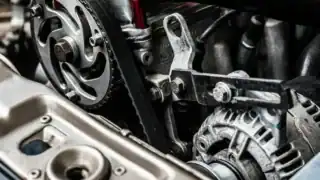
Subaru timing belt replacement requires systematic work to access the belt safely and ensure correct reassembly. The process is more involved than some other maintenance tasks, which is why it matters to have someone who knows Subaru engines specifically.

Here’s what we do:

  • Remove the right-hand wheel arch cover and any other components blocking access to the timing belt cover
  • Drain the engine oil if necessary to access the lower timing belt cover
  • Rotate the engine to the correct position using Subaru’s timing marks, ensuring the crankshaft and camshaft are perfectly aligned
  • Remove the old belt and inspect the pulleys, tensioner, and idler wheels for wear or damage
  • Fit a quality replacement belt, adjusting tension to Subaru’s exact specification using a tension gauge
  • Replace the belt cover gasket and reassemble all removed components
  • Run the engine and confirm correct operation before handover

Subaru engines are particular about timing accuracy. A belt fitted incorrectly or with improper tension can cause running issues, efficiency loss, or premature failure. That’s why we use proper diagnostic tools and follow the manufacturer’s timing procedures precisely. Many Subaru owners prefer to have their cam belt work done by a specialist who understands the brand’s quirks rather than risk a botched job at a dealership or general workshop.

Parts and Materials for Subaru Cam Belt Replacement

The timing belt itself is the main wear item, but a professional replacement often includes related parts to prevent future problems. Many workshops will recommend replacing the tensioner and idler pulleys at the same time, since they’re already exposed during the job. This approach saves labour costs later if these components wear out before the next belt service.

We fit quality parts that match Subaru specifications. Your new belt will be a genuine Subaru equivalent or OEM-specification replacement, not budget aftermarket stock. The difference matters when you’re protecting an engine that could otherwise suffer thousands of dollars in damage from a failed belt.

Using quality components also preserves your manufacturer warranty protection if your Subaru is still covered. Logbook servicing that includes timing belt replacement will keep your warranty intact, provided the work is done by a qualified independent mechanic—which we are.

What Affects Timing Belt Replacement Cost and Time?

The cost and duration of your Subaru timing belt replacement depend on several factors. Your specific model and engine size affect parts cost and labour time. Some Subaru models require removal of additional components like the water pump or alternator to access the belt, which increases the job scope. Engine oil condition and the condition of related pulleys also factor into the total work required.

We’re transparent about pricing from the start. You won’t see dealership labour rates at an independent workshop, but you also won’t get cheap no-name parts that fail prematurely. We’ll inspect the full timing belt area, discuss what’s necessary and what’s optional, and give you a clear picture of cost and time before we start. That’s our standard approach—honest advice, no upsell scripts, no surprises.

Why Trust ZP Automotive in Mitchell for Your Subaru Timing Belt?

Timing belt replacement is exactly the kind of work we specialise in. With over 10 years in the trade, we’ve completed hundreds of these jobs across Subaru’s model range. You’ll deal directly with the mechanic doing the work, not a service adviser following a sales script. We use quality parts—Penrite and Rico—not cut-price alternatives. Our pricing is fair and transparent, without the dealership labour rates or franchise upsells you’d face elsewhere.

We also handle your vehicle’s logbook servicing, so your Subaru remains warranty-protected throughout its life. Whether you need a full cam belt replacement or just want to confirm your belt’s condition, we’re here to give you the plain-English advice your Subaru deserves. Our team in Mitchell has seen every Subaru timing belt scenario imaginable, and we know how to get your car back on the road reliably.

If your Subaru is approaching 100,000 kilometres, overdue for a belt replacement, or showing any signs of timing belt wear, it’s time to get the belt checked before it fails. Call & Book Now or Claim Your Free Inspection to discuss your Subaru’s timing belt needs with us in Mitchell.
Honest Mechanics, Fair Prices in Mitchell

Owner-operated and family-run, we give you straight answers, quality parts, and fair pricing without the dealership markup or the upsell scripts.

You Deal With the Mechanic

Talk directly to the owner — no service advisors, no middlemen, no upsell pressure.

Quality Parts, Honest Pricing

Bring your vehicle in and we’ll assess what’s needed before any work begins.

Subaru Timing Belt Specialists

We know Subaru timing specs and common failure points without the dealership markup.

How Subaru Timing Belt Replacement Works

From your first call to driving away with a fresh timing belt, here's what to expect at our Mitchell workshop.

Step 1

Claim Your Free Inspection

Claim your free inspection to assess your Subaru's timing belt condition and get honest advice on replacement timing.

Step 2

Timing Belt Assessment

We inspect your Subaru's belt for wear and cracks, checking tensioner and pulley condition against Subaru specs.

Step 3

Belt Replacement & Tensioning

We remove the old belt, fit quality replacement parts, and precisely tension the system following Subaru procedures.

Step 4

Test Drive & Collection

We test your Subaru to confirm smooth operation, walk you through the work, and you're back on the road.

What Our Customers Say

5.0 (Verified Reviews)

Quality Parts From Trusted Suppliers

We use quality oils and parts from reputable suppliers — including Penrite and Rico — because what goes into your car matters as much as the work itself.

Claim Your Free Check

Fill in the form and we'll get back to you promptly — no obligation.

Booking Form
  • Vehicle Details
  • Confirm Vehicle
  • Services
  • Contact Details
No Upsell Scripts
Quality Parts Used
Plain-English Advice

Why Book With Us

Claim Your Free Inspection
Drop Off Your Car
We Get to Work
Back on the Road

Got Questions? We Have Answers

Browse the common questions below. If yours isn't listed, give us a call and we'll give you a straight answer.

Timing belt replacement on a Subaru typically takes between 2 to 4 hours, depending on your model and engine layout. Some Subaru models have more complex access to the timing belt than others, which can affect labour time. We’ll give you an accurate timeframe once we’ve inspected your vehicle and determined which parts need replacing alongside the belt.

If your timing belt fails while driving, the engine stops immediately and you’ll be stranded. More seriously, on some engines a broken belt can cause the pistons to collide with the valves, resulting in severe internal damage that costs thousands to repair. This is why timing belt service is not something to postpone once the recommended service interval approaches.

No. Australian Consumer Law, supported by ACCC guidance, states that having your vehicle serviced by a qualified independent mechanic does not automatically void your manufacturer warranty. Your Subaru warranty remains valid as long as the service is carried out to the manufacturer’s specification using appropriate parts and is recorded in the logbook. We recommend checking your specific warranty terms, but independent servicing at a qualified workshop in Mitchell is a legitimate option.

We typically replace the timing belt itself, the tensioner, and the idler pulleys. Many Subarus also benefit from replacing the water pump at the same time, since we have full access during the job and the pump may be nearing the end of its service life anyway. We inspect the cam seals and front crankshaft seal for leaks and advise if those need attention.

Most Subaru models require timing belt replacement between 100,000 and 160,000 kilometres, depending on the specific model year and engine type. Check your owner’s manual or logbook for your vehicle’s exact interval. We’ll let you know where your Subaru sits and whether the belt is due or approaching service. Regular logbook servicing helps us track this and catch it at the right time.

We use quality OEM-equivalent and genuine Subaru parts that meet manufacturer specifications. We don’t use cheap no-name components on critical jobs like this. For timing belt replacement, the belt, tensioner, and pulleys are precision parts where quality directly affects reliability and longevity. We source parts we trust, and we’re transparent about what’s going into your vehicle.

Common signs include a squealing or rattling noise from the front of the engine, visible cracks or fraying on the belt if you can see it, or a check engine light. If your vehicle is approaching the recommended service kilometre interval for your model, that’s the primary indicator to have it inspected. Don’t wait for symptoms to appear – timing belts often fail suddenly without warning, which is why preventive replacement is crucial.

No. A damaged or severely worn timing belt should not be driven at all. If the belt breaks while you’re driving, your engine will stop and you’ll lose power steering and braking assist, creating a safety hazard. On interference engines, damage can be catastrophic. If you notice signs of belt wear, have it inspected immediately and avoid driving until repairs are complete.

The service includes labour, the timing belt itself, and typically the tensioner and idler pulleys since these wear together. Many workshops also recommend replacing the water pump during this service to avoid future work. We’ll provide a detailed quote before starting work, outlining exactly what’s being replaced and why. Parts quality and engine complexity affect the overall cost, so we assess your specific vehicle first.

Check your vehicle’s logbook or owner’s manual for the recommended service interval – this is the most reliable way. Most Subarus fall between 100,000 and 160,000 kilometres. If you’re unsure about your vehicle’s history or haven’t kept detailed records, bring it in for an inspection. We can assess the belt’s condition visually and advise whether replacement is needed now or upcoming.

Timing belt replacement isn’t a performance upgrade – it’s a critical maintenance task that keeps your engine running safely and reliably. A worn or failing belt doesn’t improve performance, but replacing it at the right time prevents catastrophic engine failure and costly repairs. Think of it as preventive health care for your engine rather than a performance enhancement.

After replacement, ensure the work is recorded in your logbook for warranty and resale purposes. Your engine should run smoothly with no unusual noises. We’ll advise on the next service interval and any other findings from the inspection. Keep your receipt and service details for your records. Regular servicing thereafter helps maintain your vehicle’s reliability and protects your warranty.

Continue to site