A failing radiator will leave you stranded. European vehicles often run hotter than their Japanese or American counterparts, and when the cooling system fails, engine damage can happen quickly. European vehicles radiator replacement is one of those services that looks straightforward but depends heavily on the specific make and model. At our Mitchell workshop, we’ve seen everything from slow leaks that creep up over months to catastrophic failures that happen without warning. The good news is that catching the problem early and getting a quality radiator replacement done properly will protect your engine and keep you reliable for years to come.
Warning Signs Your Radiator Needs Replacement
Most drivers don’t think about the radiator until something goes wrong. Unlike brake pads or filters, a radiator failure doesn’t announce itself with a grinding noise. Instead, you’ll notice these tell-tale signs:
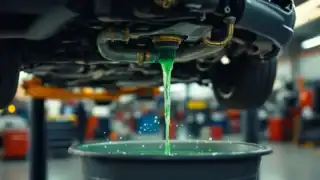
- Coolant leaks under the car, often a bright green, orange, or pink fluid pooling beneath the engine bay
- The temperature gauge climbing toward red, especially in traffic or on warm days
- Sweet-smelling steam rising from under the bonnet
- Visible corrosion, rust, or white crusty deposits on the radiator fins
- Loss of coolant level between services with no obvious leak visible
- The heater blowing cold air even when the engine is warm
European vehicles often show these symptoms earlier than other makes because of tighter engine tolerances and higher operating temperatures. If you spot any of these signs, bring your car in for a coolant system inspection before you end up with an overheated engine.
How We Diagnose and Replace Your Radiator
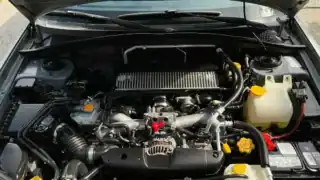
European vehicles radiator replacement requires understanding the specific design of your model. A BMW, Audi, or Mercedes radiator isn’t just a generic cooling unit; it’s engineered to work with that manufacturer’s cooling strategy, thermostat control, and often integrated fan systems.
Here’s what our process looks like:
First, we perform a full cooling system inspection. This means checking coolant concentration and condition, testing radiator cap pressure, inspecting all hoses and connections, and checking the electric fan operation. Many radiator problems are actually secondary to a faulty thermostat or weak fan, so we need to rule those out before recommending replacement. For European vehicles especially, we test against the manufacturer’s specification for coolant type and concentration, since using the wrong coolant can accelerate internal corrosion.
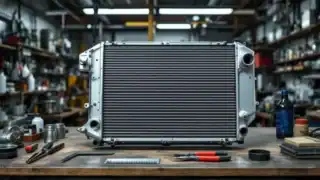
If the radiator itself is confirmed as the problem, we remove the old unit carefully and inspect the cooling system for debris or blockage that might have contributed to the failure. We flush the system with quality coolant appropriate to your vehicle’s make and model. Then we install a quality replacement radiator, reconnect all hoses and electrical connectors, and refill with the correct coolant specification.
Finally, we bleed the system to remove any air pockets, run the engine through a heating cycle, and verify that temperature readings are stable and the fans operate correctly. European vehicles cooling systems are sensitive to air locks, which can cause overheating even with a brand new radiator, so this step matters.
What Affects Cost and How Long It Takes
Several factors determine the scope of a radiator replacement job. The first is accessibility. Some European models have the radiator tucked behind bumpers, intercoolers, or air conditioning condensers, which means more labour to remove. A radiator on an older Volkswagen Golf might be straightforward; a radiator on a newer Audi or BMW can take significantly longer.
The second is parts availability. We work with quality aftermarket radiators and, where necessary, OEM-equivalent parts that meet or exceed manufacturer specifications. We don’t use cheap no-name stock. For European vehicles, especially older models, sourcing the correct radiator can take a few days, though we’ll confirm lead times upfront before you commit.
The third is what else we find. If the radiator has failed due to a faulty thermostat or a blocked cooling line, addressing those issues prevents the new radiator from failing prematurely. We’ll explain any additional work needed and let you decide what to prioritise.
Turnaround depends on parts availability and job complexity. A straightforward replacement on a newer model might be completed in a day. An older European vehicle or one requiring additional cooling system work might take longer. We’ll give you a realistic timeframe once we’ve inspected the vehicle.
Why Choose Our Mitchell Workshop for European Vehicle Cooling Work
We’re an independent, owner-operated workshop, not a dealership. That means you’re dealing directly with the mechanic doing the work, not a service advisor reading from a script. When we tell you that your radiator needs replacement, we explain what’s actually wrong, what it’ll cost, and whether anything else can wait. No upsell, no surprises.
With over 10 years in the trade, we see European cooling systems regularly. We use quality parts and fluids such as Penrite coolants and Rico radiators, not the cheapest no-name stock that’ll fail in a couple of years. Our pricing is transparent and fair, without the dealership labour rates that can double the cost of this job.
We also handle logbook servicing, so if your European vehicle is under warranty, we can service it and keep that warranty intact. Quality work, honest advice, fair price. That’s how we operate in Mitchell and the surrounding areas.
Get Your Radiator Inspected Today
If you’ve noticed coolant leaks, overheating, or any of the warning signs above, don’t wait. Cooling system failures can damage your engine in hours. Call & Book Now or Claim Your Free Inspection online to have your cooling system checked at our Mitchell workshop. We’ll let you know exactly what you’re dealing with and what needs to happen next.