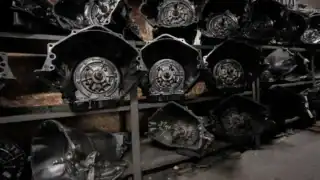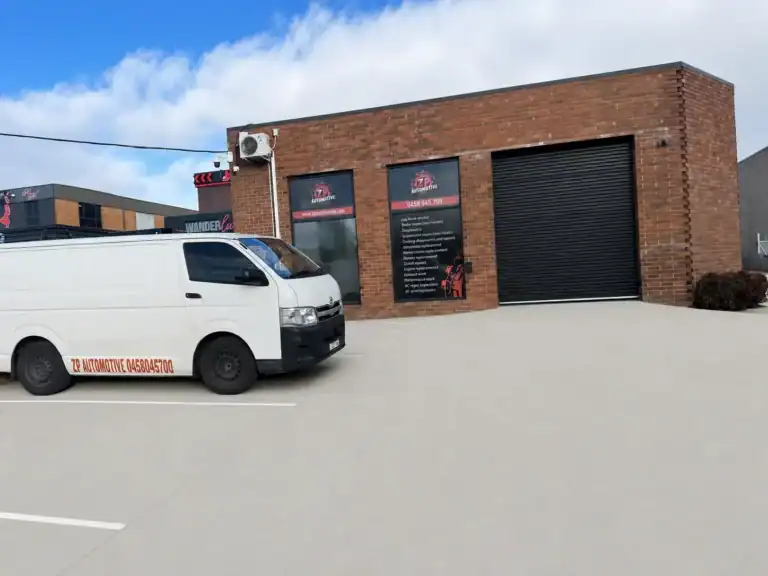
A Japanese vehicles transmission specialist in Mitchell diagnoses and repairs gearbox problems that affect how smoothly—or poorly—your car shifts. The transmission is one of your vehicle’s most complex systems, and Japanese manufacturers like Toyota, Honda, Mazda, Nissan, and Subaru engineer them to exacting standards. When something goes wrong, you need someone who understands those specific systems inside out, not a general mechanic guessing at a fault code.
Warning Signs Your Japanese Vehicle Needs Transmission Service
Transmission trouble rarely announces itself politely. Most drivers notice a problem when the gearbox either refuses to do its job or does it badly. Here’s what to listen and feel for:
- Slipping or delayed gear engagement—you accelerate but the engine revs before the car moves forward
- Grinding, clunking, or metallic noises when shifting between gears
- Shuddering or vibration during acceleration, especially at low speeds
- A burning smell (fluid overheating) or sweet odour (fluid breakdown)
- Fluid leaks visible under the car—transmission fluid is usually bright red or dark brown
- Transmission warning light on the dashboard
- Stuck in one gear, unable to shift, or refusing to engage reverse
- Difficulty finding neutral or gears slipping out of gear while driving
Automatic transmissions in Japanese vehicles are particularly sensitive to fluid condition and temperature. Once you notice any of these signs, getting a professional diagnosis stops a small fix from becoming an expensive overhaul.
How We Diagnose Transmission Problems in Japanese Vehicles
A Japanese vehicles transmission specialist doesn’t just plug in a generic code reader and hope for the best. Japanese manufacturers—especially Toyota with its logbook servicing schedule and Honda with its condition-based intervals—build transmission diagnostics into the vehicle’s DNA. We start by understanding your car’s specific logbook requirements and any warranty considerations, because working on a newer Japanese vehicle means protecting the manufacturer’s coverage.
Our process begins with a full scan of the transmission control module. Japanese vehicles store detailed fault codes that tell us whether the problem is electrical (a sensor or solenoid), mechanical (worn clutches or gears), or fluid-related (low level, wrong viscosity, or breakdown). We also perform a road test to feel how the transmission behaves under real load, not just in the workshop. This is crucial because some issues only appear when the gearbox is warm and under pressure.
If the scan suggests mechanical damage, we may recommend a fluid analysis to check for metal particles or varnish buildup. This tells us how severe the wear is and whether the transmission can be repaired or needs rebuilding. For manual gearboxes, we test clutch function, check for grinding or resistance, and inspect the flywheel and pressure plate. For CVT (continuously variable) transmissions common in many Japanese vehicles, we monitor belt tension and pulley function—these systems have their own diagnostic quirks that general mechanics often miss.
What Affects Cost and Turnaround Time
Transmission work is never cheap, but several factors shape what you’ll actually pay. First, the severity: a fluid and filter service costs far less than replacing worn internal components. Second, parts availability. OEM parts for Japanese vehicles are usually available through suppliers, but if your Subaru or Mitsubishi needs an uncommon part, lead times can stretch. We use quality parts—not no-name stock—and can source genuine-equivalent components that meet manufacturer specs without dealership margins.
Labour time depends on access. Some repairs are a few hours; rebuilding a transmission can take a week or more because the gearbox must be removed, fully dismantled, inspected, parts replaced, reassembled, and tested. We’re transparent about what we find and what needs fixing. We explain whether a small repair now will hold or whether a bigger fix is coming, so you can budget honestly.
Turnaround also depends on whether you want to use the car while we work. Some jobs require keeping the vehicle in the bay; others let us return it between diagnostic steps. We’ll talk you through timing upfront.
Why Choose ZP Automotive as Your Japanese Vehicles Transmission Specialist in Mitchell
Dealership service departments charge premium labour rates and often insist on full replacement rather than repair. National fast-fit chains don’t have the expertise to dig into Japanese gearbox electronics and internals. What you get at ZP Automotive in Mitchell is 10 plus years of hands-on experience diagnosing and fixing Japanese transmissions, owner-operated honesty about what your car actually needs, and fair pricing that doesn’t hide behind corporate mark-ups.
You deal directly with the mechanic doing the work—no service advisor with a script, no upsell pressure. If your Japanese vehicle is under warranty, logbook servicing with us keeps that protection intact. We use quality parts and fluids aligned to manufacturer specs, not the cheapest alternative that cuts corners. Our approach is simple: explain what’s wrong, show you the cost, let you decide whether to fix it now or wait. We also offer engine diagnostics, air conditioning servicing, and vehicle logbook servicing if you need additional support for your Japanese vehicle.
Get Your Japanese Vehicle Transmission Checked in Mitchell
If your Toyota, Honda, Mazda, Nissan, Subaru, or Mitsubishi is showing transmission symptoms, don’t ignore it. Gearbox problems get worse fast. Call us to Call and Book Now for a free inspection, or Claim Your Free Inspection online. We’ll tell you exactly what we find and what it’ll cost to fix.