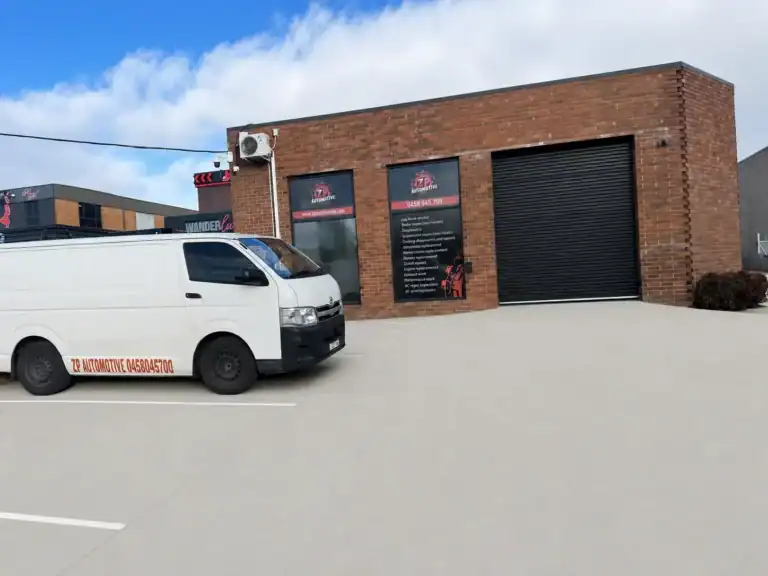
A clutch that’s wearing out won’t forgive you on the road. When you’re driving a Kia and the pedal feels spongy, takes longer to bite, or the car lurches between gears, you need a proper diagnosis from someone who knows Kia’s clutch systems inside out. Kia Clutch Specialists at our Mitchell workshop have spent years working through the specific demands Kia puts on its clutch components, from the Cerato’s daily commute to the Sorento’s heavier load. If your clutch isn’t performing as it should, ignoring it won’t make the problem smaller, and it won’t get cheaper to fix the longer you wait.
How to Spot a Clutch Problem in Your Kia
Your clutch talks to you through how the pedal feels and how your car responds when you shift. A healthy clutch engages smoothly and predictably. The moment it stops doing that, pay attention.
- Pedal feels squishy or soft, especially if it gets worse over a drive
- Clutch grabs suddenly or feels jerky when you take off from a standstill
- Slipping sensation, like your engine revs up but the car accelerates slowly
- Grinding noise when you press the pedal or shift into gear
- Burning smell when you’re in stop-start traffic or pulling away from lights
- Pedal travels further than usual before engagement point
- Difficulty shifting smoothly into first or reverse
Some drivers push through these symptoms thinking they’ll disappear. They don’t. A slipping clutch gets progressively worse, and the longer you drive with a failing one, the higher the risk of being stranded. Kia’s clutch hydraulic systems are well-engineered but not immune to wear, fluid leaks, or bearing failure. Getting an inspection early protects both your wallet and your safety.
What Happens When We Service Your Kia Clutch
Our diagnostic process starts where guesswork ends. We don’t assume anything; we test the system and measure what’s actually happening.
We begin with a full clutch pedal check. We feel the engagement point, test the pedal travel, and listen for sounds that tell us where the problem is. For Kia models, we pay close attention to the hydraulic slave cylinder and master cylinder, as these components handle Kia’s precise engagement tolerances. If the clutch fluid is low or discoloured, that signals a leak or contamination that needs addressing.
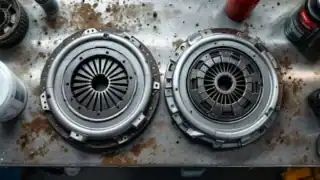
Next, we put the vehicle on a hoist and inspect the external components. We examine the release bearing for play or noise, check the flywheel for scoring or warping, and assess the pressure plate. For Kia vehicles, we reference Kia’s OEM specifications for runout and wear limits. If the flywheel is damaged, it must be resurfaced or replaced; a worn pressure plate won’t hold load properly.
On the road, we test engagement behaviour at different speeds and loads. We listen for any grinding when the pedal is released, check for slipping under acceleration, and confirm that gear changes feel smooth. This real-world test tells us whether the problem is in the friction material, the hydraulic circuit, or the mechanical components.
If a full clutch replacement is needed, we remove the transmission to access the clutch disc, pressure plate, and release bearing. Kia models often benefit from a flywheel resurface or replacement, new hydraulic components if fitted, and a quality clutch kit matched to your vehicle’s specifications. We use parts engineered to Kia’s standards, not bargain-basement stock. The job takes time done properly, but it’s time well spent.
What Affects the Cost and Timeline
Several factors shape what you’ll pay and how long the work takes. The first is whether the problem is hydraulic or mechanical. A worn clutch disc costs less than a flywheel that needs resurfacing or replacement. A leaking master or slave cylinder requires a rebuild or replacement, which adds both parts and labour.
Kia models vary in transmission type and engine size. A manual Cerato is a smaller job than a dual-clutch system in a high-spec model. Access matters too. Some Kias sit lower in the engine bay, which means less time under the car. Others require more careful removal of surrounding components.
We always discuss parts choices with you upfront. Original Kia-spec components carry a longer service life and better warranty support than cheap alternatives, and they align with your vehicle’s engineering. Aftermarket parts that meet equivalent standards are a sensible middle ground for many owners.
Turnaround depends on parts availability and the scope of the work. A straightforward clutch replacement typically runs several days; a complete overhaul with flywheel work takes longer. We’ll give you a realistic timeframe once we’ve diagnosed the problem, and we won’t rush the job to save a day.
Why Our Kia Clutch Service Keeps You on the Road
You’re not paying dealership labour rates when you come to us. We’re owner-operated and independent, which means you deal directly with the mechanic doing the work. No service advisor, no upsell scripts, just honest advice about what your Kia needs and what it can wait on. Ten years in the trade means we’ve seen nearly every Kia clutch scenario, and we know which problems are urgent and which aren’t.
We use quality parts and fluids. Penrite and Rico keep your Kia’s hydraulic and mechanical systems working as they should. You won’t find cheap no-name stock under our bay. When we fit a clutch, it’s built to last, and we stand behind the work.
If you’re running a logbook service schedule, a clutch replacement at our workshop keeps your manufacturer warranty intact. Independent mechanics like us have the expertise to maintain your vehicle without voiding anything. We’ll walk you through what happened, why it happened, and what the next steps are, all in plain language.
Get Your Kia Clutch Inspected in Mitchell
If your Kia’s clutch is slipping, grinding, or feeling soft, don’t drive it further than you have to. Call & Book Now to arrange a full diagnostic, or Claim Your Free Inspection online. We’ll have you back on the road with a clutch you can trust. Bring your Kia to Mitchell and let us show you what honest, expert clutch service looks like.