A clutch that’s wearing out or starting to slip is one of those issues that builds quietly until you’re suddenly stuck. If you’re driving a Nissan and noticing the symptoms, Nissan clutch specialists in Mitchell like us see this regularly enough to know exactly what’s happening and what needs to happen next. The clutch is what connects your engine to the gearbox, and when it starts to fail, the whole connection between power and grip falls apart. Getting it diagnosed and repaired by someone who understands Nissan’s specific clutch architecture makes the difference between a straightforward job and an expensive gamble.
How to spot a failing clutch on your Nissan
The symptoms are usually unmistakable once you know what to listen and feel for. A clutch doesn’t fail overnight in most cases; it gives you warnings. The most common sign is a burning smell when you’re accelerating or climbing a hill — that’s friction material wearing away. You might also notice that the pedal feels spongy or sits lower than it used to, or that you have to press it further than normal to change gear smoothly.
Slipping is the big red flag. You press the throttle and the engine revs but the car doesn’t pick up speed the way it should, or it takes a moment to bite. On a Nissan, this often shows up first on uphill acceleration or when you’re towing anything. Some drivers describe it as the engine spinning without the power connecting to the wheels. If you’re hearing a grinding noise when you shift gears, or if the car is hard to shift into gear at a standstill, the clutch assembly itself may be damaged.
- Burning smell when accelerating or going uphill
- Clutch pedal feels spongy, sticks, or sits lower than normal
- Engine revs but car doesn’t accelerate – slipping sensation
- Grinding or difficulty shifting into gear
- Vibration or shuddering when engaging the clutch
What a Nissan clutch diagnosis and replacement involves
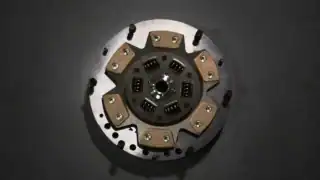
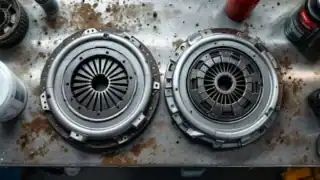
We start by listening to what you’ve noticed and then taking your Nissan for a test drive to feel the exact behaviour. From there, we get underneath. A full clutch inspection means removing the gearbox to access the clutch assembly itself, which includes the friction plate, pressure plate, and throwout bearing. For Nissan vehicles, we follow the OEM service schedule to check whether the dual-mass flywheel (if your model uses one) needs attention as well. This is important because a worn flywheel can chew through a new clutch quickly, so catching it during diagnosis saves you money later.
Once we’ve inspected everything, we give you a clear picture of what’s actually worn. If the clutch material is down to the rivets, the pressure plate is damaged, or the bearing is failing, we’ll replace the full clutch kit to Nissan specification. We use quality parts and fluids – Penrite oils for topping up and bleeding the system – because cheap replacement clutches fail prematurely and leave you stranded again.
The job itself is labour-intensive but straightforward for someone who knows Nissan’s layout. We remove the gearbox, pull the old assembly, inspect the flywheel for damage, fit the new clutch components, bleed the hydraulic system if your model has a hydraulic clutch, and then bed in the clutch with test drives to make sure everything engages smoothly and without noise.
What affects the cost and how long it takes
Clutch replacement isn’t a quick job because the gearbox has to come out. Most Nissan models in our Mitchell workshop take a full day, sometimes more if the flywheel needs machining or replacement, or if other components like the engine mount need attention while we’re in there. Parts availability is usually straightforward for common Nissan models, but if you’re driving an older or less common variant, we may need to source parts and that adds a day or two.
Cost depends on whether you’re replacing just the friction plate or the full clutch kit, which includes the friction plate, pressure plate, throwout bearing, and sometimes the pilot bearing. A full kit is the honest choice because replacing just the plate and returning the old pressure plate rarely works out well. We’re transparent about labour rates too – you won’t see dealership pricing here. You get fair rates because you’re dealing directly with the mechanic doing the work, not a service advisor and a corporate markup.
Why bring your Nissan to us for clutch work
We’ve been doing clutch repairs and replacements for over 10 years, and Nissan clutches are part of our bread and butter. We understand the differences between models – a Nissan Navara clutch is different from a Pulsar, and we know those differences cold. We use quality parts that match Nissan’s specifications, and we don’t cut corners by fitting a generic clutch just because it’s cheaper. Your warranty on the new clutch and our work stands solid because we do the job properly the first time.
Because we’re owner-operated and family-run, you work with us directly. There’s no service advisor, no upsell scripts, no pressure to do work you don’t need. We explain what’s actually wrong, what it costs, and what can wait. If your Nissan is still under manufacturer warranty or you’re running logbook servicing to keep warranty protection, clutch work done by us won’t affect that coverage – we follow the service schedule and use OEM-spec parts and fluids. We also handle wrong-fuel recovery, vehicle lockout and roadside assistance, air conditioning servicing, engine diagnostics, and ACT rego inspections as part of our full workshop offering in Mitchell.
Get your Nissan’s clutch inspected in Mitchell today
If you’ve noticed any of these symptoms, don’t drive the clutch into total failure. The sooner you get it checked, the sooner you know what you’re dealing with and can plan the repair. Call us using Call & Book Now to book your inspection, or claim your free inspection online and come in to chat about what you’ve been experiencing. We’ll get you back on the road with a clutch that’s going to last.