Brake replacement on a Porsche is not routine maintenance — it’s a safety-critical service that demands precision and an understanding of how Porsche’s braking systems work. Whether you’re driving a 911, Boxster, Cayenne, or Panamera, your brakes are engineered to handle high-performance driving and rapid deceleration. When brake pads wear out or rotors develop damage, that engineering can only protect you if the replacement work matches the original specification. At ZP Automotive in Mitchell, we specialise in Porsche brake replacement using quality parts and methodical inspection to keep your car stopping safely and predictably.
Warning Signs Your Porsche Needs Brake Service
Porsche brakes send clear signals when they need attention. Listen for squealing or grinding sounds when you brake — squealing often indicates worn pads, while grinding suggests metal-on-metal contact that can damage rotors if ignored. A soft or spongy brake pedal, or one that feels lower than normal, points to air in the hydraulic lines or internal component wear. If your brake warning light appears on the dashboard, or if braking feels less responsive than usual, have the system inspected immediately.
Some Porsche drivers notice uneven brake feel or pulling to one side during braking — this can mean pad wear is not uniform, or that a caliper is sticking. Vibration or pulsing through the pedal under heavy braking suggests rotor warping or uneven wear. These are not minor annoyances. Porsche brakes are built to perform, and any deviation from smooth, confident stopping is worth investigating before the problem cascades into a larger repair.
How Porsche Brake Replacement Works
Porsche brake systems vary across the range. A 911 Carrera uses a different caliper design and pad specification than a Cayenne, and the diagnostic approach must account for these differences. Our process starts with a full brake system inspection, not just a pad thickness check. We examine pad wear patterns, measure rotor thickness and runout, test brake fluid condition, and assess caliper function across all four wheels.
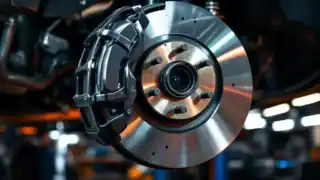
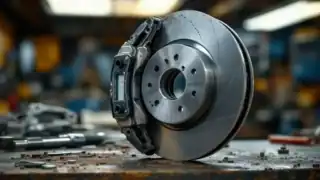
When pads are worn or damaged, we remove the wheels and get a clear view of the calipers and rotors. Porsche pad replacement includes removing old pads, cleaning and inspecting the caliper internals, checking brake hose condition, and measuring rotor thickness to Porsche’s specification. If rotors are beyond minimum thickness or show scoring or warping, we replace them with quality OEM-equivalent or OEM parts — not bargain rotors that compromise your car’s stopping power.
Brake fluid is flushed and replaced as part of a complete brake replacement service. Porsche specifies DOT 4 fluid with particular thermal and viscosity properties; old fluid absorbs moisture over time and loses effectiveness. We bleed the system thoroughly to remove air and ensure firm pedal feel. The work finishes with test-driving to confirm brakes bite confidently, pedal height is correct, and any warning lights have cleared.
What Affects Cost and Time for Porsche Brake Work
Several variables influence how long brake replacement takes and what the cost looks like. The number of wheels needing attention matters — sometimes you’ll replace pads and rotors all around; sometimes wear is uneven and only the front or rear needs work. Rotor condition is the big variable. If rotors are reusable, the job is faster and less expensive. If they’re scored, warped, or below minimum thickness, they must be replaced.
Parts availability and specification affect timeline and cost. Genuine Porsche parts are always available but carry a premium. Quality aftermarket alternatives that meet or exceed OEM specification are often a sensible middle ground for independent ownership. We use quality brands and avoid no-name parts, because your brakes deserve better than cheap friction material or rotors that distort under heat.
Whether you’ve had the brakes serviced regularly also matters. If pads are changed before rotors wear excessively, you’ll replace pads and fluid and be done. If pads have been neglected and have worn into the rotor, damage spreads and the scope of work grows. Brake fluid condition, caliper performance, and brake hose age all feed into a transparent quote once we’ve inspected your car.
Why Choose ZP Automotive for Your Porsche Brakes
You own a Porsche because you value engineering and performance. Brake replacement work should reflect that same standard. We’re an independent workshop with 10+ years’ hands-on experience in the trade — no service advisors, no upsell scripts, no dealership labour rates. You deal directly with the mechanic doing the work, which means honest, plain-English advice about what your brakes actually need.
We use quality parts — Penrite oils, Rico and genuine-equivalent brake components — because cutting costs on friction material and rotors is a false saving. Your Porsche’s braking performance depends on precision and proper specification, and that’s what we deliver. Pricing is fair and transparent. We explain what’s wrong, what it’ll cost, and what can wait. No surprises, no pressure.
Logbook servicing also means your manufacturer warranty stays intact. If you’re running a new Porsche through a logbook or service schedule, independent brake replacement does not void that coverage — Australian consumer law protects you, and we make sure the work is recorded correctly.
Porsche Brake Pad Change and Rotor Maintenance in Mitchell
A Porsche brake pad change is straightforward when pads are the only concern, but the real skill lies in catching rotor wear before it becomes irreversible. Rotor thickness and surface condition are critical to braking feel and stopping distance. When you bring your Porsche to ZP Automotive in Mitchell for brake pad replacement, we measure everything to specification. If a rotor can be safely reused, we say so. If it needs replacement, we explain why and what difference it makes to your driving.
Porsche rear brake pads often wear differently than front pads, depending on your driving style and whether you use manual engine braking on downhills. Our inspection covers all four wheels independently, so you’re never paying for unnecessary work or deferring work that should be done now. That transparency is what makes brake replacement straightforward — you know exactly what’s happening and why.
Next Steps for Your Porsche Brakes
If you’ve noticed any brake symptoms — noise, soft pedal, warning lights, or just uncertainty about pad wear — book a free inspection. Call & Book Now or Claim Your Free Inspection online and we’ll get your Porsche on the lift, run a full brake system check, and give you a clear picture of what needs doing and what the cost looks like. We’re based in Mitchell and ready to help keep your brakes stopping as well as Porsche intended.