Hyundai brake replacement is one of the most important safety services your vehicle will need. Whether you’re driving a Hyundai i30, Tucson, or Santa Fe around Mitchell, your brakes are working hard every time you stop. When pads wear down or rotors become damaged, replacement is not optional—it’s essential to keep you and your passengers safe on the road. We inspect, diagnose, and replace Hyundai brake components using quality parts and OEM-equivalent specifications that match your vehicle’s engineering.
When Do Your Hyundai Brakes Need Replacement?
Brake wear is not always gradual. Sometimes you’ll notice clear warning signs; other times the first hint is a dashboard warning light. Learn to recognise the symptoms so you can act before a small problem becomes a safety risk.
- Squealing or squeaking sounds when braking, even lightly
- Grinding noise that suggests metal-on-metal contact
- Brake pedal feels soft, spongy, or travels closer to the floor than usual
- Brake warning light illuminates on your dashboard
- Pulsing sensation through the pedal when braking
- Vehicle pulls to one side when you apply the brakes
- Visible brake fluid leaks beneath the vehicle
Hyundai vehicles, particularly those with higher mileage or frequent city driving, tend to show wear patterns that are predictable. Front brake pads typically wear faster than rear pads because the front brakes absorb most of the stopping force. If you own a Hyundai, regular inspection every 20,000 kilometres helps catch wear before it becomes critical. Here in Mitchell, where stop-start traffic is common, brake pads often need attention sooner than highway-only vehicles.
What Happens During a Hyundai Brake Replacement
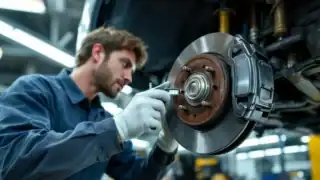
Our diagnostic process starts with a full brake system inspection. We lift your Hyundai, remove the wheels, and measure pad thickness, rotor condition, and fluid integrity. This tells us exactly what needs replacement and what can wait. We don’t guess—we measure and show you the facts.
For Hyundai vehicles, we follow the manufacturer’s specifications for parts and procedures. When we replace brake pads, we also inspect the rotors for scoring, warping, or excessive wear. If rotors are within acceptable thickness limits, we resurface them to ensure smooth, even braking. If they’re too thin or damaged, we replace them with OEM-equivalent parts that match Hyundai’s original engineering standards.
Brake Pad Replacement
Brake pad change involves removing the wheel, unbolting the caliper, and sliding out the worn pads. We clean the caliper and rotor surfaces, apply high-temperature brake grease to the caliper pins, and install new pads. For Hyundai models, we use quality replacement pads engineered to match your vehicle’s braking characteristics—not the cheapest no-name stock that may feel unpredictable or wear unevenly.
Rotor Resurfacing or Replacement
Rotors take the friction load during braking. Over time, they develop a rough surface or warp slightly, reducing braking efficiency and creating vibration. We measure rotor thickness and surface condition. If resurfacing is enough, we machine them back to a smooth finish. If they’re damaged or too thin, we replace them with Hyundai-spec rotors that restore your vehicle’s original stopping performance.
Brake Fluid and System Check
Old brake fluid absorbs moisture and loses effectiveness. During a brake pad or rotor replacement, we inspect fluid condition and top up or flush if needed. For Hyundai vehicles on logbook servicing, brake fluid renewal is often due around the same interval as major brake work, so we check your service schedule and advise accordingly.
What Affects Cost and Turnaround Time for Brake Work
Several factors influence the scope and cost of brake replacement. The extent of wear dictates whether you need pads only or pads and rotors. Hyundai model type also matters—a compact i30 has different brake requirements than a larger Santa Fe, and parts pricing reflects that difference.
Parts availability is usually not an issue for Hyundai vehicles; quality replacement pads and rotors are readily sourced. Labour time depends on whether both front and rear brakes need attention or just one axle. A front brake pad and rotor replacement typically takes 1.5 to 2.5 hours, while rear brakes or both axles take longer. We always confirm the scope and estimated time before starting work so there are no surprises.
We use quality brands like Penrite brake fluid and OEM-equivalent pads and rotors—components engineered to work properly with Hyundai’s brake system. We don’t compete on being the cheapest option; we compete on fair pricing and honest advice. You’ll know exactly what’s needed and what it costs before we start.
Why Choose ZP Automotive in Mitchell for Your Hyundai Brake Replacement
We’re an independent, owner-operated workshop with over 10 years of hands-on experience. Brendan works on your vehicle directly—you deal with the mechanic doing the work, not a service advisor reading from a script. That means honest, plain-English advice about your brakes: what’s worn, what needs replacing now, and what can wait another few thousand kilometres.
Brakes are one of our core specialities. We inspect them thoroughly, replace them correctly, and test the results before you drive away. Hyundai logbook servicing customers also benefit—we maintain your manufacturer warranty integrity while providing fair pricing well below dealership labour rates. Quality parts, transparent pricing, and no upsell pressure. That’s how we work.
Get Your Hyundai Brakes Inspected in Mitchell
If you’ve noticed any brake symptoms or your vehicle is due for maintenance, don’t delay. Brake safety is non-negotiable. Claim Your Free Inspection by calling us to book your appointment, or use our online booking system to reserve a time that suits you. We’ll measure your pad wear, assess your rotors, and explain exactly what your Hyundai needs.