Owner-Operated Workshop
Quality Parts & Oils
5.0★ Rating
Transparent Pricing

5.0 (Verified Reviews)

Industry Leading Hyundai Brake Repair In Mitchell

We inspect and repair Hyundai brakes in Mitchell with quality parts and transparent pricing. Book your free inspection to find out what your brakes need.

Honest Advice

Quality Parts

5.0★ Rating

Hyundai Brake Inspection

Claim Your Free Check

Fill in the form and we'll get back to you promptly — no obligation.

Booking Form
  • Vehicle Details
  • Confirm Vehicle
  • Services
  • Contact Details
No Upsell Scripts
Quality Parts Used
Plain-English Advice

Why Book With Us

Claim Your Free Inspection
Drop Off Your Car
We Get to Work
Back on the Road

Hyundai brake repair in Mitchell keeps your car safe and responsive when it matters most. Your brakes are one of the few things on a car that can fail suddenly and create a dangerous situation for you, your passengers, and everyone around you. Unlike many other mechanical problems, brake issues cannot wait for a convenient time to book in — if something feels wrong with your brakes, you need a professional inspection as soon as possible.

Warning Signs Your Hyundai Needs Brake Repair

Hyundai brake systems are generally reliable, but they’re also high-use components that wear predictably. Learning to spot the early warning signs means you can deal with problems before they become serious or expensive.

  • Soft, spongy, or low brake pedal that goes closer to the floor than usual
  • Brake pedal feels hard or requires extra pressure to stop the car
  • Squealing, grinding, or metallic noise when braking
  • Visible brake fluid leak under the vehicle or on the inside of the wheel
  • Brake warning light on the dashboard, or ABS light illuminated
  • Vibration, pulsing, or pulling to one side when you brake
  • Brake fluid that looks dark, contaminated, or smells burnt

Some of these signs mean you need brake pads or rotors replaced. Others point to fluid issues, caliper problems, or master cylinder wear. The only way to know which is to have a qualified mechanic inspect the system properly.

How Hyundai Brake Repair Works at Our Mitchell Workshop

When you bring your Hyundai in for brake repair, we start with a thorough inspection of the entire brake system. This is not a guessing game – we measure pad thickness with precision tools, inspect rotor condition and runout, check fluid level and condition, test brake lines and hoses for leaks or corrosion, and verify that all components are functioning as Hyundai specified.

Hyundai vehicles use either conventional hydraulic brakes or, on some models, integrated ABS systems that require specific diagnostic steps. We’re familiar with both, and we can read Hyundai fault codes directly to pinpoint what’s actually failing rather than replacing parts that still have life left in them.

Brake Pad and Rotor Replacement

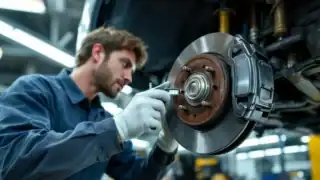
If your pads are worn, we remove the wheels, clean the brake hardware, install new pads that match Hyundai’s friction specifications, and inspect or replace rotors if they’re damaged, scored, or out of tolerance. We use quality parts – not the cheapest no-name stock – because your brakes need to work consistently and safely every single time.

Fluid and Line Service

Brake fluid is hygroscopic, which means it absorbs moisture from the air over time. Old fluid can cause soft pedal feel, reduced stopping power, and internal corrosion of brake components. If your fluid is contaminated or the system has a leak, we flush the system with fresh fluid, identify the source of any leak, and repair or replace damaged lines or cylinders.

ABS and Brake Warning Light Diagnosis

Hyundai’s ABS and electronic brake systems are sophisticated. When a warning light appears, we plug in proper diagnostic equipment to read the fault codes and understand what the system detected. A light often points to a specific sensor, wiring issue, or fluid level problem – not an automatic brake overhaul.

What Affects the Cost and Time for Hyundai Brake Repair

Brake repair costs depend on what’s actually failing. A simple pad replacement takes less time and money than a rotor replacement or brake line repair. The age and condition of your vehicle also matter – older Hyundais may have corrosion or wear that makes some repairs more involved.

Parts availability for Hyundai is usually good, and we carry common brake components or can source them quickly. We’ll explain what we find, what needs fixing now, and what can wait, so you’re never surprised by the bill or left guessing whether work was required.

We do not rush brake jobs to save time. Proper inspection, correct part installation, and thorough testing take as long as they take. You’ll know exactly what’s needed and what the cost will be before we start work.

Why Choose ZP Automotive for Hyundai Brake Repair in Mitchell

We’re an independent, owner-operated workshop competing against Canberra dealership service departments and large chain mechanics. When you bring your Hyundai to us, you deal directly with the mechanic doing the work – no service advisor, no upsell scripts, no dealership labour rates inflating your bill.

Brendan has over 10 years in the trade and understands Hyundai’s brake systems inside out. We use quality parts and fluids like Penrite and Rico, not the cheapest stock that passes the time. Your manufacturer warranty stays intact with logbook servicing, and we price our work fairly and transparently because we’re here to do the job right, not to squeeze every dollar out of every visit.

Brakes are one of our specialties. We inspect thoroughly, explain what we find in plain English, and give you honest advice about what needs fixing now and what can wait. If you need other services – wrong-fuel recovery, vehicle lockout assistance, air conditioning servicing, or engine diagnostics – we’re equipped to help with those as well.

Next Steps for Your Hyundai’s Brakes

If your Hyundai brake pedal feels soft, you hear grinding, or a warning light is on, Call & Book Now or Claim Your Free Inspection to have the system diagnosed properly. We’ll let you know what’s wrong and what it’ll cost to fix it. Our Mitchell workshop is ready to inspect your Hyundai and give you honest, quality brake repair you can trust.

Other Services

Whatever your needs we have you covered, see some similar services below or click "See All Services" to explore our full service offering.

Honest Mechanics, Fair Prices in Mitchell

Owner-operated and family-run, we give you straight answers, quality parts, and fair pricing without the dealership markup or the upsell scripts.

You Deal With the Mechanic

Talk directly to the owner — no service advisors, no middlemen, no upsell pressure.

Quality Parts, Honest Pricing

Bring your vehicle in and we’ll assess what’s needed before any work begins.

Hyundai-Specific Brake Expertise

We know Hyundai brake systems inside out and source quality parts matched to your model.

How Hyundai Brake Repair Works

From your free inspection through to safe, confident braking, our straightforward brake repair process.

Step 1

Claim Your Free Inspection

Call & Book Now or claim your free brake inspection to diagnose wear and get honest repair advice.

Step 2

Brake System Inspection

We measure pad thickness, inspect rotors for wear and damage, and test braking response on your Hyundai.

Step 3

Precision Brake Repair

We replace worn pads, service or machine rotors, and fit quality parts to Hyundai specifications.

Step 4

Safety Check & Collection

We test brakes on the road, confirm everything works perfectly, then return your vehicle safe and ready.

What Our Customers Say

5.0 (Verified Reviews)

Quality Parts From Trusted Suppliers

We use quality oils and parts from reputable suppliers — including Penrite and Rico — because what goes into your car matters as much as the work itself.

Claim Your Free Check

Fill in the form and we'll get back to you promptly — no obligation.

Booking Form
  • Vehicle Details
  • Confirm Vehicle
  • Services
  • Contact Details
No Upsell Scripts
Quality Parts Used
Plain-English Advice

Why Book With Us

Claim Your Free Inspection
Drop Off Your Car
We Get to Work
Back on the Road

Got Questions? We Have Answers

Browse the common questions below. If yours isn't listed, give us a call and we'll give you a straight answer.

It depends on what needs fixing. A brake pad replacement typically takes 1-2 hours. If your brake booster, master cylinder, or brake lines need work, plan for longer. We’ll inspect your Hyundai and give you a realistic timeframe before we start. Most jobs we can turn around same-day, especially if you’re local to Mitchell.

Watch for a soft or spongy brake pedal, reduced stopping power, unusual noises like squealing or grinding when you brake, or a brake warning light on your dashboard. Hyundais sometimes show longer brake travel or soft pedal feel when brake fluid gets old or the booster is wearing. If you notice any of these, get it inspected. Driving with compromised brakes is unsafe.

No. Under Australian Consumer Law guidance from the ACCC, independent servicing by qualified mechanics does not automatically void your manufacturer warranty. Your Hyundai warranty remains intact as long as the work is done to standard and you use quality parts. We use quality brands like Penrite and Rico. That said, this is general information only – check your warranty paperwork or contact your dealer about your specific circumstances.

We lift the vehicle safely and remove the wheels to inspect pads, rotors, callipers, brake lines, and fluid condition. We test pedal feel and stopping power, check for leaks, and measure pad and rotor thickness against Hyundai specifications. You’ll get a clear report of what’s worn, what needs immediate attention, and what can wait. We explain everything in plain English before quoting any work.

Brake pads typically last 30,000 to 60,000 kilometres depending on driving habits and conditions. Rotors last longer but may need replacement if they’re worn or damaged. Rather than a set schedule, we recommend having brakes inspected every 12 months or sooner if you notice warning signs. Regular inspection catches wear early and prevents more expensive damage down the line.

Hyundai brake systems are generally reliable, but we do see premature pad wear on some models, especially if you’re doing a lot of city driving with frequent stopping. Older Hyundais sometimes develop soft pedal issues linked to brake fluid condition or booster wear. Having your system inspected regularly helps catch these early. If you’ve noticed any soft pedal or longer stopping distances, bring it in for a full check.

Several factors influence pricing: which components need replacement (pads, rotors, callipers, or lines), the condition of your brake system, parts quality, and labour time. A simple pad and rotor job costs less than booster or master cylinder work. We’ll provide a detailed quote after inspection. At ZP Automotive, we always explain what you’re paying for before starting any work.

No. Worn brake pads reduce your stopping power and can damage rotors, increasing repair costs and safety risk. If pads are metal-to-metal, you’ve already compromised your braking ability. The sooner you get them replaced, the safer you are. If you’re hearing grinding or squealing, don’t delay – get your brakes checked immediately to avoid accidents and further damage.

Continue to site