Brake problems don’t wait for a convenient time, and neither should you. If you’ve noticed your car pulling to one side, heard a metallic grinding noise, or felt a soft or spongy pedal, your Australian Vehicles brake system needs attention. At our Mitchell workshop, we’ve spent over a decade diagnosing and repairing brake faults across all makes and models, including the popular Australian Vehicles range. An Australian Vehicles brake service isn’t just about replacing worn pads — it’s a complete inspection to catch issues before they become dangerous or expensive.
Warning Signs Your Brakes Need Professional Inspection
Your brakes are doing their job so quietly that you might not notice they’re failing until the problem is serious. Most drivers bring their car in because they’ve noticed something that worried them. Here are the most common signs:
- Brake pedal feels soft, spongy, or goes down further than normal
- Squealing or metallic grinding noise when braking
- Brake warning light on the dashboard
- Car pulls to one side when braking
- Brake pedal vibrates or pulsates under foot
- Longer stopping distances than usual
- Brake fluid leaking underneath the car (dark liquid)
Even if your brakes feel fine, a full service every 20,000 to 30,000 kilometres or every two years catches wear before it becomes unsafe. Australian Vehicles models vary in brake design, from standard mechanical systems to more complex integrated anti-lock and electronic stability setups, so knowing what to look for matters.
What Happens During an Australian Vehicles Brake Service in Mitchell
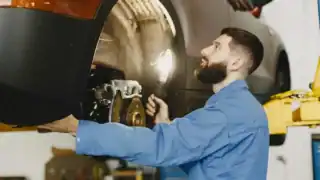
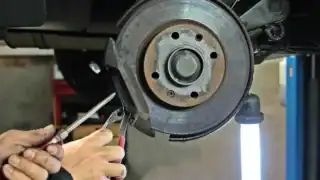
A proper brake service is more than swapping out pads. We start by lifting the vehicle safely and removing the wheels to inspect the entire system. For Australian Vehicles, this means checking brake pad thickness against manufacturer specifications, measuring rotor thickness and run-out (which tells us if the rotor is warped), and visually inspecting calipers, brake hoses, and brake fluid condition.
We test your brake pedal response and check for leaks in the hydraulic system. Brake fluid absorbs moisture over time, which can cause corrosion inside calipers and wheel cylinders. If your fluid looks dark or contaminated, we recommend a fluid flush and fill with fresh, DOT-approved fluid that meets Australian Vehicles’ OEM specifications. We also inspect the master cylinder, brake lines, and all connection points for damage or wear.
If pads or rotors need replacing, we use quality equivalent parts matched to your vehicle’s original specifications, not cheap generic stock that wears quickly or glazes over. For Australian Vehicles models, we align new components precisely and bed them in correctly so you get quiet, responsive braking without noise or premature wear.
Diagnostic Tools and Testing
Modern Australian Vehicles often have anti-lock braking systems (ABS) and electronic brake distribution (EBD) integrated into the chassis control computer. If your brake warning light is on, we plug in a diagnostic scanner to read the fault codes and understand what’s actually wrong. This saves you from unnecessary parts replacement — we only fix what the vehicle tells us needs fixing.
What Affects Cost and How Long It Takes
Brake service costs depend on what we find. If only pads are worn and rotors are still within limits, the work is straightforward and takes an hour or two. If rotors are scored, warped, or worn below minimum thickness, they need replacement — that’s more labour, more parts, and more time. A full hydraulic system inspection with fluid flush takes longer than a simple pad change.
Parts availability varies. For Australian Vehicles brakes, genuine OEM components are usually available quickly, but aftermarket equivalent quality parts are also reliable and often more cost-effective. We’ll discuss your options before we start work and explain what each choice means for longevity and performance.
Severity matters too. If you’ve been driving with metal-to-metal grinding for months, the caliper pistons may be damaged, requiring piston replacement or full caliper rebuilds. Catching brake wear early keeps costs down — that’s why regular inspection is worth the investment.
Why Australian Vehicles Owners Trust Our Brake Service
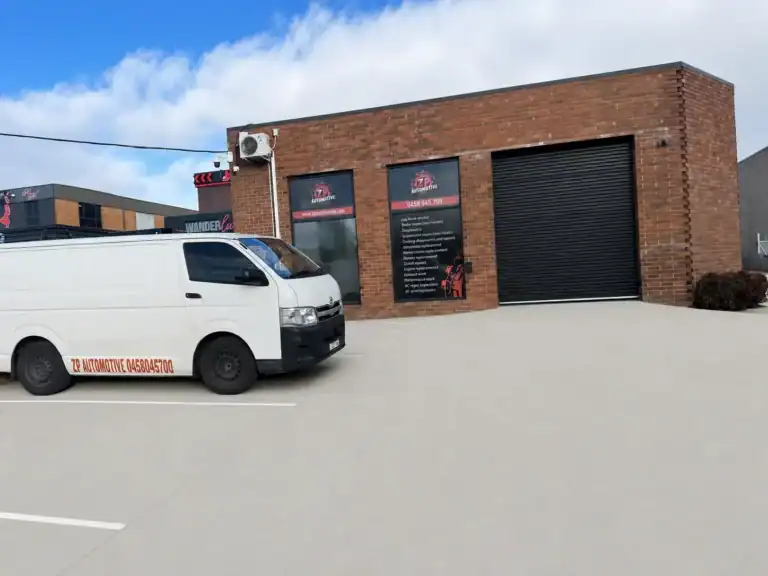
We’re an independent, owner-operated workshop in Mitchell. You talk directly to the mechanic doing your brakes, not a service advisor pushing extras. Brendan’s 10+ years in the trade means he knows the common failure points on Australian Vehicles models and catches problems you might not see coming.
We use quality parts — Penrite brake fluid and matched equivalent components, not the cheapest no-name stock from a discount supplier. Your Australian Vehicles deserves brakes that work reliably. We price fairly and explain exactly what needs to happen and why, with no dealership labour rates and no upsell scripts. If your brakes are safe and don’t need service yet, we’ll tell you that too.
Logbook servicing customers also benefit from keeping their manufacturer warranty intact. Brake service completed by a qualified independent mechanic won’t void your new-car warranty, as long as you use OEM-equivalent parts and keep service records. That’s genuine value compared to dealership pricing.
Next Steps for Your Australian Vehicles Brake Check
If you’re hearing noise, feeling a soft pedal, or just want peace of mind before a long trip, bring your Australian Vehicles in for a free brake inspection. Call & Book Now or Claim Your Free Inspection online to schedule a time that suits you. We’ll give you honest feedback on what’s needed, what can wait, and what it’ll cost — no pressure, no surprises.