A Porsche cooling system repair keeps your engine running at the right temperature, no matter how hard you’re pushing the car. Whether you’re driving through Mitchell’s suburbs or taking your Porsche on a weekend drive, an overheating engine will strand you fast and risk serious internal damage. Porsche Cooling System Repair is one of those services that often works invisibly until something goes wrong, but catching issues early means the difference between a simple repair and a catastrophic engine failure.
Signs Your Porsche Cooling System Needs Attention
Some cooling system problems announce themselves clearly. Others creep up quietly. Watch for these warning signs:
- Temperature gauge climbing higher than normal, or sitting in the red zone
- Steam or coolant vapour coming from under the bonnet
- Coolant leaks on your driveway or under the car
- Sweet-smelling fluid pooling beneath the vehicle (that’s coolant)
- Heater blowing cold air when it should be warm
- White, milky coolant instead of clear or slightly tinted fluid
- Engine running rough or losing power, especially under acceleration
Some Porsche owners notice their car pulls more cooling air than usual, or the electric fans run constantly even when driving at normal speeds. That’s a sign the engine is working harder to shed heat than it should be. Don’t ignore these symptoms, especially if you’ve got a newer model with a dual-circuit cooling setup or an older air-cooled heritage Porsche. Both need proper diagnosis.
What Happens During a Porsche Radiator and Cooling System Inspection
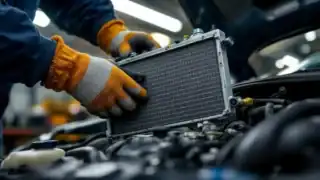
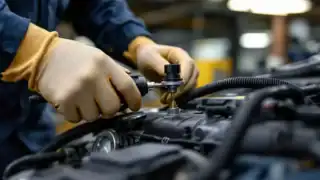
We start by reading the engine’s diagnostic data to see what the sensors are telling us about coolant temperature and thermostat operation. Porsche models log cooling events, and we pull that history to understand whether the problem is intermittent or constant. From there, we visually inspect the radiator, hoses, water pump, thermostat housing, and expansion tank for leaks, corrosion, or physical damage.
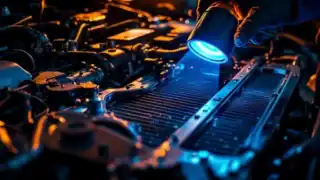
Next comes a coolant pressure test. We pressurise the cooling system to find hairline cracks or failed seals that won’t show up on a static inspection. A faulty radiator cap or a cracked hose often reveals itself this way. For Porsche models with complex cooling circuits (many modern Porsches have separate cooling loops for the engine, transmission, and intercooler), we check each section independently to isolate where the failure is.
If the thermostat is stuck or not cycling properly, the engine either overheats or runs too cold, both of which trigger warning lights and cause poor fuel economy. We test the thermostat’s opening temperature and confirm it’s responding as Porsche’s specifications require. If it needs replacement, we use OEM-equivalent parts that match Porsche’s exacting standards, not generic aftermarket stock.
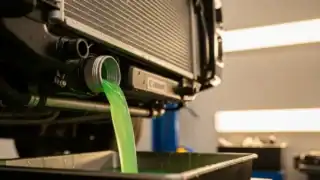
Coolant condition matters too. Over time, Porsche coolant breaks down and becomes acidic, which accelerates corrosion inside the engine and radiator. We analyse your current coolant and recommend a full flush and refill if it’s old or contaminated. Using the correct Porsche-spec coolant (not just any red or blue coolant off the shelf) protects your engine’s internal surfaces and prevents future leaks.
What Affects Cost and Repair Time for Cooling System Work
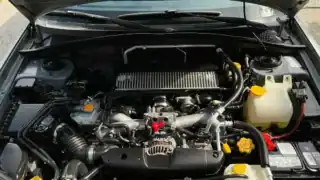
The scope of your repair depends entirely on what we find. A failed radiator cap is a quick fix and low cost. A cracked radiator or failed water pump takes longer and costs more. The vehicle’s age and model also matter. Older air-cooled Porsches have simpler cooling systems with fewer components; modern water-cooled models have thermostats, multiple hoses, expansion tanks, and electric fan modules that add complexity and parts cost.
Parts availability can affect timeline. We stock common cooling components and can usually order Porsche-specific parts quickly, but if you need a custom radiator for a rare model, lead time stretches out. We’ll give you a clear timeframe once we’ve diagnosed the fault.
Labour time scales with the job. A radiator replacement on a 911 or Boxster takes longer than a thermostat change because the radiator sits deeper in the engine bay. We don’t pad hours artificially; we give you an honest estimate and stick to it. If we discover additional work during the job (a corroded hose that needs replacement, for instance), we’ll let you know before we proceed.
Why Mitchell Drivers Trust Us With Their Porsche Cooling System Repairs
We work on Porsches regularly. That familiarity means we know where cooling failures happen most often on specific models, we have the right diagnostic tools and test equipment, and we understand Porsche’s build quality and engineering intent. We use quality coolants and OEM-equivalent parts that are spec-matched to your car, not bargain-bin alternatives that fail prematurely.
You deal directly with the mechanic doing the work, not a service advisor following a script. That means honest, plain-English explanations of what’s wrong, what it costs, and what actually needs fixing right now versus what can wait. We’ve been in the trade over 10 years and we’re not here to upsell parts you don’t need. We’re here to keep your Porsche reliable and on the road.
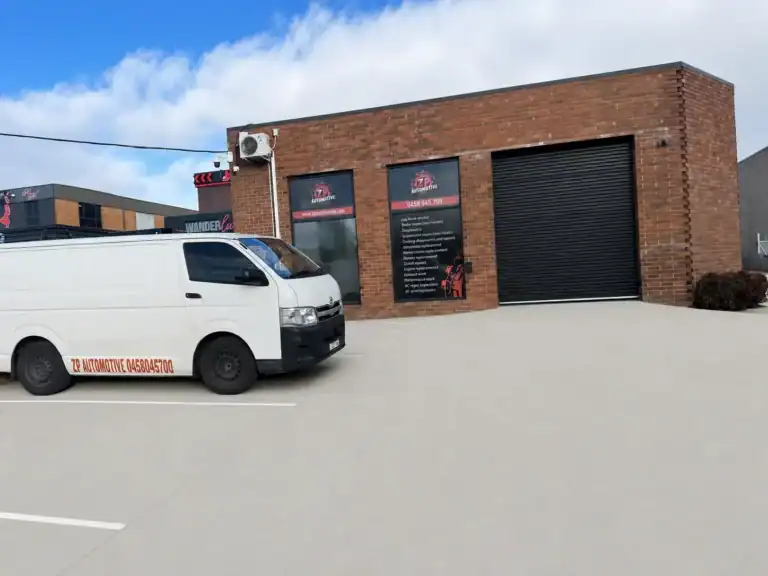
ZP Automotive is owner-operated and family-run. Fair, transparent pricing without dealership labour rates is our standard. We also service logbook maintenance to keep your manufacturer warranty intact, and we stock quality parts and oils from Penrite and Rico. We provide engine diagnostics, air conditioning servicing, and ACT rego inspections as part of our broader workshop capability.
Book Your Porsche Cooling System Inspection in Mitchell
If you’ve noticed any cooling warning signs, or if your Porsche hasn’t had a cooling system service in a few years, don’t wait for a breakdown. Call & Book Now or Claim Your Free Inspection to get a clear picture of your cooling system’s health. We’ll explain exactly what we find and what needs to happen next.