Brake problems in a Holden need proper diagnosis and repair. Whether you drive a Commodore, Colorado, Captiva, or another Holden model, brake safety is non-negotiable, and a Holden brake specialist in Mitchell understands the specific brake architecture and wear patterns that Holden owners face. We inspect, diagnose, and repair Holden brake systems using methods matched to how these vehicles are engineered, not by guessing or replacing parts that don’t need replacement.
How to Tell Your Holden’s Brakes Need Attention
Most Holden owners come in when they notice something unmistakable. The most common sign is brake pedal feel: a soft or spongy pedal that goes further down than normal is often air in the brake lines or failing brake fluid. You might also notice the pedal sinks slowly to the floor when you hold steady pressure at a red light, which points to a master cylinder or caliper issue. Don’t ignore this.
Listen for other clues. A high-pitched squeal or squeak during braking is usually brake pad wear indicators doing their job, but it can also signal uneven pad wear or dust in the caliper. A grinding sound, especially a metallic scrape, means pads have worn to metal and you’re grinding rotor, which costs more to fix later. A clicking or knocking sound from the rear during braking can mean worn brake pad clips or loose caliper bolts.
Feel matters too. Brake fade, where the pedal gets harder to press or brakes feel less responsive as you brake repeatedly, often means contaminated brake fluid, overheating, or failing brake hoses. Pulsing or vibration through the pedal during braking points to uneven rotor surfaces and usually requires rotor machining or replacement. Pulling to one side during braking is a sign of uneven pad wear, seized calipers, or collapsed brake hoses on that side.
- Soft or spongy brake pedal
- Pedal sinks to the floor when held steady
- Squealing or squeaking during braking
- Grinding metal sound
- Brake fade or hard pedal feel
- Pulsing or vibration in the pedal
- Car pulls left or right when braking
- Brake warning light on the dashboard
What a Holden Brake Specialist Does During Inspection
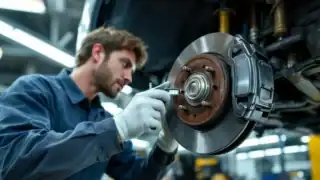
We don’t assume. A proper brake diagnosis on a Holden starts with a visual inspection of pads, rotors, and caliper condition. We measure pad thickness with a gauge to see exactly how much material is left, not estimate by eye. We check rotor surfaces with a dial indicator to measure runout, which tells us whether a rotor can be machined or needs replacement. We inspect caliper pistons and slide pins for corrosion or seizing, common issues in Holdens that have sat idle or lived in wet conditions.
We test brake fluid condition. Old fluid absorbs moisture and loses stopping power; a simple test strip shows whether the fluid is due for a full brake flush. We examine brake hoses for cracks, bulges, or leaks and inspect the master cylinder bore for pitting or damage. On Holden models with ABS, we scan for fault codes to identify electronic braking issues separate from mechanical wear.
We check the entire system before recommending work. Brake pad wear patterns tell us whether your calipers are hanging or your alignment is pulling the car sideways. Rotor discolouration shows heat stress. Fluid colour and smell reveal whether overheating or contamination has occurred. This thoroughness keeps you from paying for parts you don’t need.
What Affects Brake Repair Cost and Timeline in Mitchell
Brake work cost varies with severity and parts choice. Pad replacement alone is straightforward and relatively quick. Rotor work adds time if resurfacing is needed, and replacement costs more than machining. Caliper failure or brake hose replacement requires more labour and parts sourcing. We discuss your options upfront and use quality parts like Penrite fluids and reputable brake component brands, not the cheapest no-name alternatives that fail early.
Timeline depends on what’s found. Simple pad replacement typically takes an hour or two. Rotor work, caliper service, or a full brake flush adds a few hours. Parts availability occasionally extends the schedule, but we order OEM-equivalent or quality aftermarket components and keep common Holden brake parts in stock. We never rush brake work to squeeze in another job, and we explain delays clearly if they occur.
Holden brake systems vary by model year and engine size. Older Commodores and Falcons use simpler hydraulic layouts, while newer Captivas and Colorados include ABS and electronic stability control that require diagnostic scanning. We know these differences and account for them in diagnosis and repair.
Why ZP Automotive Is Your Mitchell Choice for Holden Brake Specialists
You deal directly with the mechanic who inspects and repairs your Holden’s brakes. There’s no service adviser pushing upgrades or upsell scripts. We explain what’s wrong, what it costs, and what can wait. If your pads are marginal but safe, we’ll tell you that instead of replacing them today. If rotors need replacement, we explain why machining won’t help and what the timeline is.
We’re owner-operated and family-run with over 10 years in the trade at ZP Automotive. We don’t operate on dealership labour rates or franchise margins. Our pricing is fair and transparent, and we don’t charge extra for diagnostic time if you book the repair with us. We use quality parts and fluids that we trust, not the cheapest available, because brake failure isn’t something to economise on.
Brake work is speciality territory for us. We’ve handled everything from simple pad wear to complex caliper and hose failures. We maintain your Holden’s warranty when you choose logbook servicing with us, carry credentials for ACT rego inspections, and handle roadside brake emergencies in the Mitchell area. Your Holden’s brakes will be safe when you leave our workshop.
Next Steps for Your Holden’s Brakes
If you’ve noticed any brake symptoms, don’t wait. Call & Book Now to book a brake inspection in Mitchell, or use our online booking system to Claim Your Free Inspection. We’ll diagnose the issue, explain what needs to happen, and get your Holden safe on the road.