A tailshaft connects your transmission to the rear differential, transferring engine power to the wheels. For Australian vehicles, tailshaft repair and maintenance is often overlooked until something goes wrong, but catching problems early prevents breakdowns and keeps your car reliable. If you’re experiencing vibration, clunking noises, or loss of power delivery, your tailshaft may need attention. At our Mitchell workshop, we diagnose and repair tailshaft issues in Australian vehicles with the same straightforward approach we apply to every job: inspect thoroughly, explain what we find, and fix it right.
Signs Your Tailshaft Needs Inspection
Tailshaft problems usually announce themselves through vibration or noise, but not always loudly. Pay attention to these warning signs:
- Vibration felt through the floor or steering wheel, especially during acceleration or at specific speeds
- A clunking or banging sound from underneath the vehicle when shifting gears or driving over bumps
- Loss of power delivery or the engine revving without the car accelerating smoothly
- Visible damage to the rubber mounting bushes or centre bearing (if accessible)
- Leaking grease around the universal joints or coupling points
These symptoms mean the tailshaft’s components are wearing, cracking, or failing. Ignoring them risks leaving you stranded and can lead to more expensive damage to the transmission or differential. If you notice any of these, bring your vehicle in for a proper inspection rather than waiting for the problem to worsen.
What We Check During Australian Vehicles Tailshaft Repair and Diagnosis
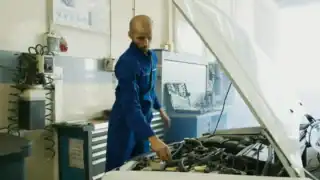
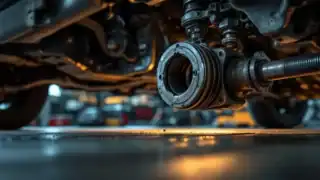
Our tailshaft inspection starts with a visual assessment of the shaft itself, looking for cracks, bending, or visible wear along its length. We check the universal joints for play, stiffness, or corrosion, and inspect the centre bearing (if fitted) for noise, movement, or grease leakage. We also examine the rubber bushes that mount the shaft to the vehicle frame, as these deteriorate over time and are common wear items.
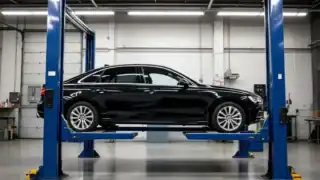
Next, we test the tailshaft under load. Lifting the rear wheels and spinning them by hand while listening and feeling for roughness tells us whether the joints are binding or worn. We also perform a road test to hear and feel how the vehicle behaves during acceleration, deceleration, and coasting, which helps pinpoint where the problem sits. Once we’ve identified the issue, we explain what’s actually wrong and what needs to be fixed.
For Australian vehicles, tailshaft construction varies by model year and drivetrain configuration. Older models may have two-piece shafts with a centre bearing; newer vehicles often use a single longer shaft. Utes and vans frequently have different bearing arrangements than sedans, so our inspection adapts to what’s fitted to your vehicle. We don’t assume all Australian vehicles are the same, because they’re not.
Repair or Replace: What the Job Involves
Not every tailshaft issue requires full replacement. If only the universal joints are worn, we can rebuild them. If the centre bearing is failing, it can often be replaced independently. If the shaft itself is bent or cracked, replacement becomes necessary. The scope of work depends on what we find during inspection and your vehicle’s age and mileage.
Removal and reinstallation is straightforward but requires care. We drop the shaft safely, disconnect it from the transmission and differential, inspect all mounting points, and reassemble everything to the correct torque specifications. We’ll also check the transmission seal and differential seal while we’re in there, since leaks sometimes follow tailshaft work if seals are already compromised.
What Affects Cost and Turnaround Time
Several factors influence how long the job takes and what you’ll pay. Whether we’re repairing or replacing the entire shaft makes the biggest difference. A full replacement takes longer than joint servicing. Parts availability also matters: if your vehicle uses a common Australian market shaft, we can usually source parts quickly. Less common models may require a few days’ lead time.
We use quality replacement parts and won’t fit inferior no-name stock. If your vehicle originally used a genuine Australian manufacturer shaft, we’ll fit an equivalent that meets or exceeds those specifications. Labour time depends on your vehicle’s design, whether the shaft is easy to access, and whether we encounter any seized bolts or unexpected wear on mounting components during removal.
We won’t guess at pricing or timeline. Once we’ve inspected your tailshaft, we’ll tell you exactly what’s needed, how long it’ll take, and what it’ll cost, with no surprises added later.
Why You Can Trust Us With Your Australian Vehicles Tailshaft Repair in Mitchell
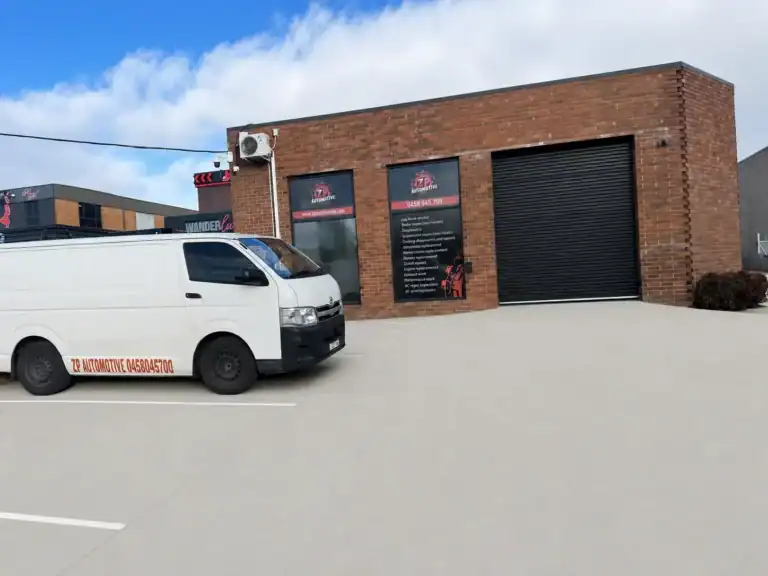
We’re independent, owner-operated, and Brendan has over 10 years in the trade. That means you deal directly with the mechanic doing the work, not a service advisor with a quota. We don’t have dealership labour rates or franchise upsell scripts. We use quality parts like Penrite and Rico products because they’re fit for the job, not because they’re the cheapest option on the shelf.
Our approach to tailshaft work is the same as our approach to everything: honest advice, fair pricing, and transparent communication. If your tailshaft needs repair, you’ll know exactly what’s wrong, why it happened, and what you’re paying for before we start. We also handle logbook servicing, wrong-fuel recovery, vehicle lockout and roadside assistance, engine diagnostics, and air conditioning servicing for Australian vehicles across Mitchell and the surrounding areas.
Ready to Get Your Tailshaft Sorted
If your Australian vehicle is vibrating, clunking, or losing power, or if you simply want to rule out tailshaft problems, call and book now or claim your free inspection. We’ll get to the root of the issue and let you know what’s needed to get your car back to reliable condition. We’re based in Mitchell and ready to help.