A tailshaft carries engine power through to your wheels. When it develops problems, you’ll notice vibration, clunking sounds, or sometimes a loss of drive altogether. Subaru tailshaft repair in Mitchell starts with understanding what’s gone wrong and whether it’s a bearing, seal, joint, or something more serious. Early diagnosis saves you from a complete failure that leaves you stranded.
Common Signs Your Subaru Tailshaft Needs Attention
The tailshaft is a rotating component that runs from your transmission to the rear differential. When it wears or fails, the symptoms are hard to miss. You might feel vibration under acceleration, especially when you’re pushing the car hard or climbing a hill. Others experience a clunking or banging noise from underneath the vehicle when you engage drive or reverse. Some owners report a burning smell or notice that the car feels like it’s losing power intermittently.
In Subaru models, worn tailshaft bearings are one of the most common issues. The weight and design of Subaru’s boxer engines put steady load on the tailshaft, so bearings can fatigue over time or if the seals fail and let contamination in. Universal joints (if your model has them) can also develop play, creating that distinctive clunk you hear at the moment you shift gears. Oil leaks around the tailshaft flanges are another red flag, because they suggest the seals are breaking down.
- Vibration or humming that gets worse as speed increases
- Clunking sound when shifting into drive, reverse, or when accelerating hard
- Loss of power or hesitation when pulling away
- Oil staining on the driveway underneath the rear of the vehicle
- Burning smell from underneath, especially after long drives or towing
How We Diagnose and Repair Subaru Tailshaft Problems
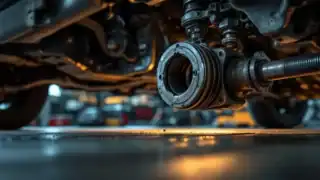
When you bring your Subaru in, we start by listening to where the noise or vibration happens and under what conditions. We then lift the vehicle and inspect the tailshaft visually, checking for damage, cracks, or obvious wear on the joints and seals. For Subaru models, we follow the factory diagnostic approach: we check runout on the tailshaft itself, inspect bearing play, test the flex of universal joints (where fitted), and look at seal condition. If the symptoms point to bearing failure or a damaged joint, we’ll often remove the tailshaft so we can inspect it thoroughly on the bench.
Subaru tailshafts are engineered to tight specifications, and trying to guess what’s wrong without proper inspection usually means expensive mistakes. We test components individually rather than replacing the whole assembly unnecessarily. Bearings can sometimes be replaced in isolation. Seals are often the culprit and cost far less than a full rebuild. If the shaft itself is damaged or the joints are beyond repair, we’ll tell you clearly what needs replacing and what the cost will be before we start work.
We use quality parts that match Subaru’s specifications. That means OEM-equivalent bearings and seals, not cheap aftermarket stock that might last six months. If a full tailshaft assembly replacement is needed, we source units that meet the factory spec for your model and year. The work itself involves removing the tailshaft, inspecting or replacing the faulty components, and reinstalling with proper alignment and torque specs. We’re meticulous about getting the bolts right, because a loose tailshaft is a safety risk and a noise problem.
What Affects the Cost and Time for Your Repair
The cost of Subaru tailshaft repair depends almost entirely on what’s actually broken. If it’s a seal replacement, the work is straightforward and the parts are cheap. If it’s a bearing, you’re looking at more time and a higher parts cost, but still manageable. A full tailshaft assembly replacement costs more but is sometimes the most practical option, especially if the shaft itself is damaged or if multiple components have worn out together.
How long it takes also varies. A seal replacement might be a half-day job. A bearing replacement or joint repair takes longer because we have to remove the whole shaft and often disassemble it. A full assembly swap is quicker in terms of labour, but sourcing the right unit for your Subaru model can add lead time. We’ll explain all this upfront so you understand what you’re signing up for. No surprises, no rush to order parts you don’t need.
Why Subaru Owners in Mitchell Trust Us With Their Tailshaft Repairs
We’re an independent workshop owned and run by a mechanic with over 10 years in the trade. You work directly with the person doing the job, not a service advisor reading from a script. That means honest advice about what actually needs fixing and what can wait. We don’t sell parts you don’t need, and we don’t charge dealership labour rates for straightforward work.
We use quality parts like Penrite for fluids and reputable component suppliers, not the cheapest no-name stock. Your Subaru’s warranty is never at risk from logbook servicing with us, and even for repairs outside the logbook, we’re transparent about every step. If you’re unsure whether you need a full rebuild or just a seal, we’ll diagnose it properly and explain your options. That’s the kind of straightforward service you get when you’re dealing directly with the mechanic who works on your vehicle.
Book Your Subaru Tailshaft Inspection in Mitchell
If you’re hearing noise from underneath, feeling vibration, or noticing oil leaks near your tailshaft, don’t ignore it. The sooner we diagnose the problem, the sooner we can fix it and get you back to smooth, quiet driving. Call & Book Now or Claim Your Free Inspection to get started.