A failing tailshaft can turn a simple drive into a real problem. Land Rover tailshaft repair in Mitchell addresses one of the components that gets less attention than it should, despite being critical to transferring power from your gearbox to the rear wheels. Whether you’re driving a Discovery, Defender, or Range Rover, a damaged tailshaft doesn’t just cost money to fix—it can leave you stranded if it fails completely. We’ve seen plenty of Land Rovers come in with tailshaft issues that owners didn’t realise they had until vibration or noise became impossible to ignore.
Symptoms That Your Land Rover Tailshaft Needs Repair
The tailshaft on a Land Rover typically shows warning signs before catastrophic failure. Knowing what to listen and feel for helps you avoid a breakdown on the road.
- Vibration under acceleration or cruising speed, especially noticeable through the floor or steering wheel
- Clunking or banging noise from underneath the vehicle when you change gear or accelerate hard
- Grinding or squealing coming from the rear end of the transmission tunnel
- Difficulty engaging gears smoothly, or gears slipping under load
- A rattling sound that gets worse over rough terrain or bumpy roads
- Visible leakage or damage to the rubber bushes (silent blocks) that support the shaft
Land Rovers are built for rough country, and that means the tailshaft takes a beating. Off-road work, towing, or simply years of Australian roads can wear the universal joints, bushes, and mounting points. If you’ve noticed any of these signs while driving around Mitchell, getting the tailshaft inspected stops small problems from becoming expensive failures.
What Happens When We Inspect and Repair Your Land Rover Tailshaft
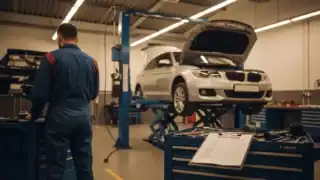
When you bring your Land Rover in, we start by getting under the vehicle and running a proper diagnostic. This isn’t a quick glance—we’re checking the entire assembly from the gearbox coupling through to the rear differential.
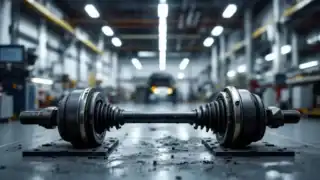
Our inspection covers several key points specific to Land Rover models. We examine the universal joints for wear and play, checking whether they still rotate smoothly or have developed side-to-side movement. We inspect the rubber bushes (silent blocks) that isolate vibration—these are common failure points on Land Rovers, especially on vehicles that see regular towing or rough use. We also check the shaft itself for bending, cracks, or corrosion, and we verify that all mounting bolts and brackets are secure and intact.
Once we’ve identified the problem, the repair depends on what we find. Sometimes it’s just a failed bush replacement, which is a straightforward job. Other times the universal joints have worn past their usefulness, or the shaft itself has picked up damage and needs full replacement. We source Land Rover-specification parts—genuine or OEM-equivalent—to ensure the repair is done properly and lasts. No point fitting substandard components to a quality vehicle.
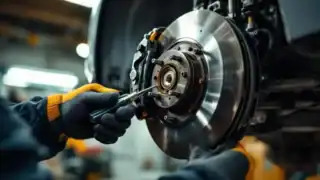
The actual repair involves removing the tailshaft safely, either replacing worn components or installing a new assembly. We rebalance everything to factory tolerances before reassembly, because even a small imbalance will cause vibration that you’ll feel for the next 50,000 kilometres.
What Affects Cost and Time for Tailshaft Repair
Several factors influence how much the repair will cost and how long it takes. The extent of damage is the biggest one—a bush replacement is a different job from a full shaft replacement. Whether you need genuine Land Rover parts or can use quality aftermarket equivalents also plays a role in the final bill. Availability matters too; if we need to order a specific component for your model and year, that affects scheduling.
Access varies depending on your vehicle. Some Land Rovers require more disassembly than others to reach the tailshaft safely. Transmission type and drivetrain setup (two-wheel drive versus four-wheel drive) can change the approach slightly as well. We’re honest about these variables upfront—we’ll explain what needs doing, what it’ll cost, and how long it’ll take before we start work.
Why Land Rover Owners in Mitchell Choose ZP Automotive for Tailshaft Repair
You deal directly with the mechanic doing the work. There’s no service advisor pushing extras or scripting upsells. You get straight answers about what’s wrong and what needs fixing, in plain English. With over 10 years in the trade, we’ve handled plenty of Land Rover diagnostics and repairs, so we know the common weak points and how to fix them properly the first time.
We source quality parts—Penrite oils and Rico components where applicable—not the cheapest no-name stock that fails after a year. Our pricing is transparent and fair, without the dealership labour rates. Logbook servicing remains unaffected by having independent repairs done here; your Land Rover’s warranty stays intact as long as the work meets manufacturer standards. ZP Automotive is an independent, family-run workshop competing against dealership service departments, and our strength is honest, quality work at sensible prices.
Get Your Land Rover Tailshaft Inspected in Mitchell
If you’ve felt vibration, heard clunking, or suspect your tailshaft isn’t right, don’t wait. Call us to book an appointment or claim your free inspection to have the shaft properly diagnosed and repaired. We’ll get you sorted with quality work and fair pricing.