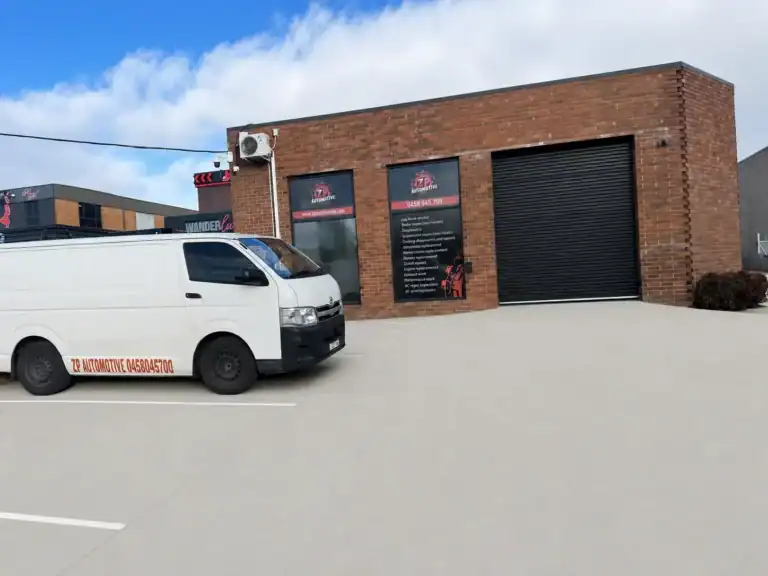
A tailshaft connects your Hyundai’s transmission to the rear differential, transferring engine power to the rear wheels. When a tailshaft fails or develops problems, you lose the ability to drive safely, or you’re left stranded entirely. Hyundai tailshaft repair in Mitchell is a straightforward job when caught early, but ignoring warning signs can turn a simple fix into a costly rebuild. We see these issues regularly at our workshop, and we’ll walk you through what’s happening, what needs fixing, and how long it takes.
Common Signs Your Hyundai Tailshaft Needs Repair
Tailshaft problems usually announce themselves clearly. Watch for these symptoms:
- Clunking or banging sounds from underneath, especially when accelerating or changing gear
- Vibration felt through the floor or steering wheel, often worse at higher speeds
- Rattling noises that come and go, usually when the engine’s under load
- Visible grease leaking from the centre bearing or U-joint seals
- A grinding sensation when you press the accelerator, as though power isn’t transferring smoothly to the wheels
- Difficulty engaging gears or a sensation that the transmission is slipping
These symptoms don’t always mean the tailshaft itself is broken. Sometimes it’s worn U-joints, a failing centre bearing, or a loose mounting bracket. That’s why a proper inspection matters. We’ll get under your Hyundai, spin the shaft by hand, check for play in the joints, and look for wear or damage. Once we know what’s actually wrong, we’ll explain your options.
How We Diagnose and Repair Your Tailshaft
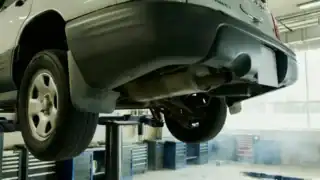
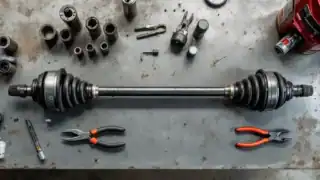
Hyundai tailshaft repair starts with a full inspection. We lift the vehicle, remove the tailshaft carefully, and inspect every component. For most Hyundai models, we’re looking at the front and rear U-joints, the centre bearing (which supports the shaft mid-way along its length), and the rubber doughnut coupling that absorbs vibration and misalignment. We also check the mounting points where the shaft bolts to the transmission and differential.
Hyundai’s engineering favours modular tailshaft design, which means we can often replace individual worn components rather than the entire assembly. This approach saves you money and gives you genuine-equivalent parts that match Hyundai’s original specifications. We don’t use cheap, no-name parts here. We work with quality components that will last and perform properly on your vehicle.
Once we’ve identified the worn or damaged parts, we discuss your options. Sometimes only the U-joints need replacing. Other times, the centre bearing has failed and needs a fresh unit. If the shaft itself is bent or cracked, we’ll source a quality replacement that matches Hyundai’s design standards. The removal and reinstallation process is straightforward but precise. We mark the shaft alignment before removing it so we can reinstall it in the same position, maintaining balance and preventing vibration. Once the new parts are fitted or the old ones are rebuilt, we test the vehicle to confirm the repair has solved the problem.
What Affects the Cost and Time for Your Hyundai Tailshaft Repair
Several factors influence how much work is involved and how long the repair takes. If only the U-joints are worn, you’re looking at a faster, less expensive job. If the centre bearing has failed, that adds complexity. The age of your Hyundai matters too. Older models sometimes have seized bolts or corroded fasteners that take longer to remove safely without damaging surrounding components.
Parts availability affects timing. Genuine Hyundai parts are usually in stock or arrive quickly. If you prefer a quality aftermarket alternative, we can source that too. We won’t tell you to buy the most expensive option just to pad the bill. We’ll explain the difference between OEM and equivalent aftermarket parts, and you’ll choose what suits your budget and expectations.
The condition of related components matters as well. While we’re repairing the tailshaft, we check the transmission seals and differential condition. If we spot something that’s wearing or leaking, we’ll mention it and let you decide whether to address it now or monitor it.
Why Hyundai Owners in Mitchell Trust Us for This Work
You’re not dealing with a service desk and an upsell script here. You work directly with the mechanic who’ll repair your Hyundai. We’ve been doing this for over 10 years, and we understand Hyundai’s engineering and common wear patterns across their range. We’ll explain what’s wrong in plain English, tell you what it’ll cost before we start, and let you know what can wait.
We use quality parts and fluids, not the cheapest stock. Your Hyundai deserves parts that last. We price fairly and transparently. You won’t see dealership labour rates here. If your Hyundai is still under manufacturer warranty, logbook servicing and legitimate repairs like tailshaft work won’t affect your coverage. We’ll make sure you stay protected.
Our workshop is owner-operated and family-run. We’re invested in doing right by the drivers in our community. That means honest advice, quality workmanship, and a fair price. When your tailshaft is repaired properly, you’ll feel the difference immediately. No more clunking, no more vibration, smooth acceleration and quiet operation.
Book Your Hyundai Tailshaft Inspection in Mitchell Today
If your Hyundai is making noise underneath or you’ve felt vibration through the floor, don’t ignore it. The longer you wait, the more damage can occur. Call & Book Now or claim your free inspection so we can diagnose the issue and give you a clear picture of what needs doing. We’re here in Mitchell, ready to help.